
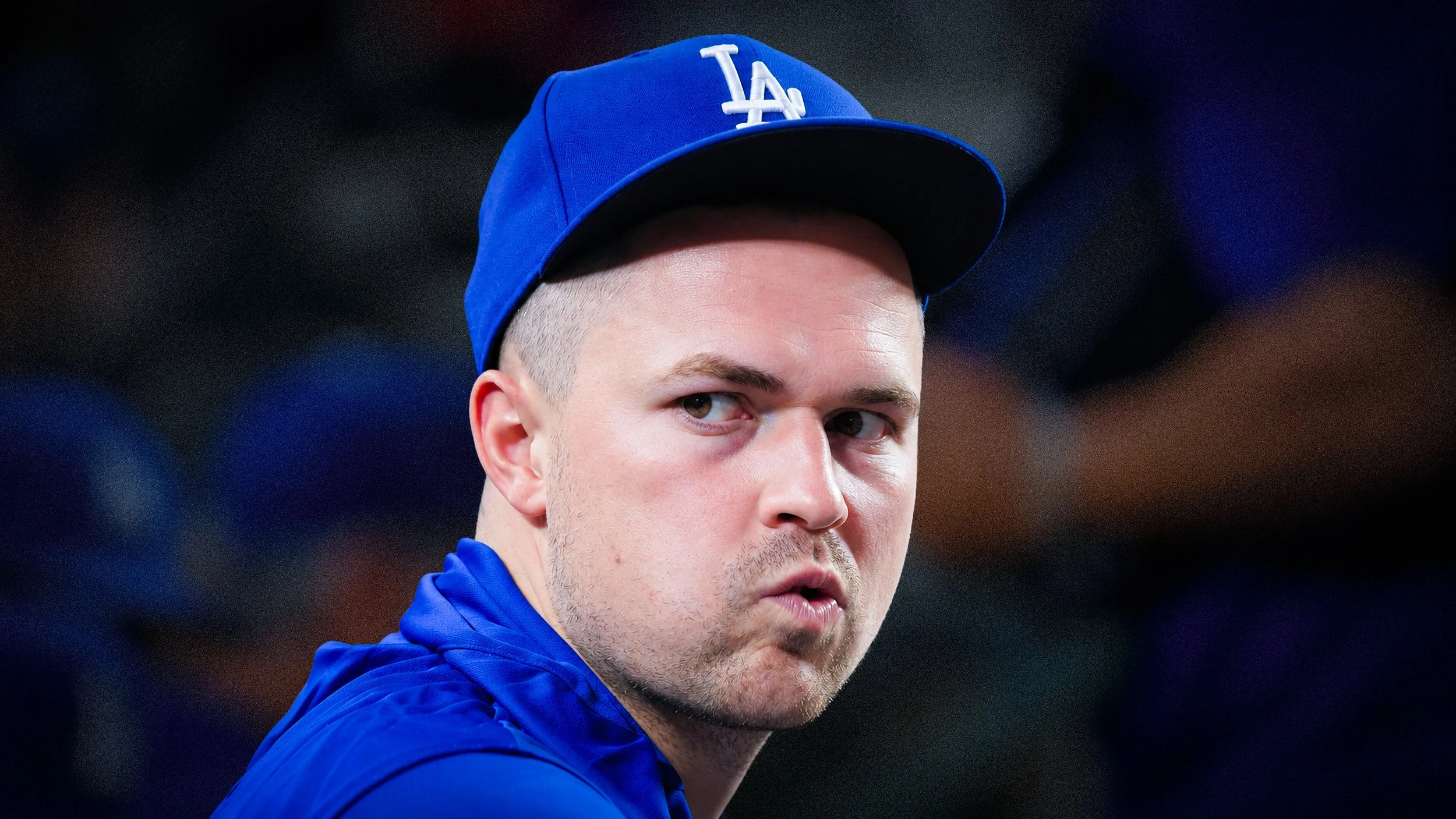
The Dodgers and Tarik Skubal appear to want the same reunion.
Whether they want the same contract is becoming a much more difficult question.
ESPN’s Jeff Passan reports that Skubal has “no interest in a shorter-term, higher-dollar deal,” a structure that could otherwise make Los Angeles one of the most aggressive teams pursuing him.
That conflicts with Katie Woo’s reporting for The Athletic that the Dodgers would prefer to retain Skubal on a shorter agreement with an exceptionally high average annual value. According to Woo, Los Angeles’ interest may depend upon Skubal accepting fewer years than other teams are likely to offer.
Together, the two reports reveal a potential gap between what Skubal wants and what the Dodgers appear comfortable guaranteeing.
They do not establish that Los Angeles has made an offer, that Skubal has rejected one or that negotiations are breaking down.
Dodgers Have Confirmed Their Interest
The Dodgers’ interest in retaining Skubal is no longer speculative.
Brandon Gomes confirmed at the General Managers Meetings that Los Angeles has remained in contact with Skubal’s representatives.
“We’ve been in touch with his camp, and our expectation is we’ll meet at some point,” Gomes said.
Gomes did not announce a meeting date or disclose whether the Dodgers have submitted a contract proposal. He acknowledged that Skubal earned the opportunity to evaluate the entire market after his performance in Los Angeles.
“I know that he enjoyed his time here, we loved having him,” Gomes said. “He’s earned the right to be in this position and figure out what’s best for him and his family.”
Skubal joined the Dodgers at the trade deadline and immediately became their most reliable postseason starter.
He went 5-2 with a 2.61 ERA across 10 regular-season starts for Los Angeles. He then allowed three earned runs with 14 strikeouts across 11 postseason innings. mlb.com
Across the entire regular season, Skubal finished:
12-7
2.72 ERA
0.96 WHIP
186 strikeouts
27 walks
158⅔ innings
His production, age and status as a two-time Cy Young Award winner have positioned him to challenge the largest pitching contracts in baseball history.
Skubal Reportedly Wants Long-Term Security
Passan’s report changes the conversation because it challenges what previously appeared to be the Dodgers’ clearest path to keeping Skubal.
A shorter agreement with an enormous annual salary would allow Los Angeles to compensate Skubal at a historic level without carrying the contract deep into his late 30s.
That structure may not appeal to Skubal.
Passan reports that Skubal is not interested in following the contract model Kyle Tucker accepted from the Dodgers last offseason. Tucker signed for four years and $240 million, giving him a nominal annual salary of $60 million while retaining opt-out opportunities.
As we previously examined when an agent predicted Skubal could receive a six-year, $360 million contract, such a deal would provide more guaranteed money than any pitcher has received while avoiding the final years of a traditional eight- or nine-year agreement.
That projection now appears less compatible with Skubal’s reported preference.
ESPN’s survey of 27 industry evaluators produced an average projection of eight years and $355 million, approximately $44.4 million annually. The Athletic has projected a nine-year, $405 million agreement.
Those are market estimates—not offers or confirmed demands—but both illustrate the kind of long-term guarantee Skubal may be positioned to receive. abc7.com
Why The Dodgers May Prefer Fewer Years
The Dodgers’ apparent preference for a shorter contract is not necessarily about spending less.
A shorter agreement could require them to pay Skubal considerably more per season.
The advantage would be limiting how long Los Angeles carries the risk associated with guaranteeing hundreds of millions of dollars to a pitcher entering his age-30 season.
Skubal underwent Tommy John surgery while in college, flexor-tendon surgery in 2022 and another elbow procedure during the 2026 season to remove a loose body.
He returned from the latest procedure and pitched at an elite level. The history nevertheless remains relevant when evaluating an eight- or nine-year commitment.
The Dodgers also have several major rotation contracts already on their books:
Yoshinobu Yamamoto is signed through 2035.
Blake Snell is signed through 2029.
Tyler Glasnow is signed through 2028.
Shohei Ohtani remains under contract through 2033 and intends to resume pitching.
Roki Sasaki, Emmet Sheehan, Gavin Stone and Justin Wrobleski provide younger internal options.
That depth does not make Skubal unnecessary. His performance after joining the Dodgers demonstrated exactly how valuable another proven frontline starter can become when injuries change a rotation’s plans.
It does, however, give Los Angeles the ability to establish a limit rather than negotiating from desperation.
CBA Uncertainty Adds Another Complication
The current collective bargaining agreement expires December 1, with MLB expected to enter a lockout if a new agreement is not reached.
Potential changes to the sport’s financial system—including MLB’s push for a salary cap—could make teams more reluctant to add massive long-term contracts before they know the rules that will govern future payrolls.
Woo reports that this uncertainty is one reason the Dodgers may avoid another lengthy commitment this offseason.
A shorter agreement would give Los Angeles more flexibility if the next CBA significantly changes the competitive-balance tax or introduces another form of payroll restriction.
Skubal may have the opposite incentive.
Starting pitchers face considerable injury risk. A long-term agreement would provide greater financial security regardless of what happens to his health or the league’s economic structure.
That creates a reasonable position for both sides.
The Dodgers may want to limit long-term exposure.
Skubal may want to maximize guaranteed security while his market value is at its highest.
Scott Boras Has Not Confirmed The Reported Preference
Skubal’s agent, Scott Boras, was asked Wednesday whether his client would consider a shorter contract carrying a higher annual salary.
Boras declined to discuss negotiations. Los Angeles Times
That does not contradict Passan’s reporting, but it reinforces the need to distinguish sourced information from a direct public statement.
Skubal has not publicly said he would “absolutely” reject a shorter contract. Boras has not announced a minimum number of years or total guarantee. No specific Dodgers proposal has been reported.
Passan’s report describes Skubal’s current preference.
Preferences can influence negotiations without representing an unchangeable demand.
Competition Gives Skubal Little Reason To Compromise Early
The Dodgers are not Skubal’s only serious option.
The Mets are expected to meet with him next week. The Blue Jays are also preparing a meeting, while the Padres have expressed interest.
As we covered when the Blue Jays emerged as another challenger for Skubal, every additional bidder improves Boras’ ability to pursue both years and money.
Skubal has little reason to accept a shorter agreement before determining whether another club will provide the long-term guarantee he reportedly prefers.
The Mets possess the financial resources and rotation need to make an aggressive offer. Toronto has repeatedly pursued the biggest names available. San Diego could create additional pressure by offering Skubal an opportunity to remain in Southern California and pitch against the Dodgers within the division.
If one of those teams offers eight or nine years at a record-setting total value, Los Angeles would have to decide whether to change its preferred structure or allow Skubal to leave.
Could The Two Sides Find A Middle Ground?
Contract structures do not have to fit perfectly into “short term” or “long term.”
A longer agreement containing early opt-outs could provide Skubal with guaranteed security while preserving his opportunity to return to the market. A contract could also include deferrals, signing bonuses or other mechanisms that change its present-day value and Competitive Balance Tax calculation.
There is no reporting that the Dodgers or Boras have discussed any of those possibilities.
They simply illustrate why a difference in initial preferences does not automatically end negotiations.
The larger question is which side has more reason to compromise.
Skubal is the best pitcher available and has several wealthy suitors. He may not need to accept the Dodgers’ preferred structure.
Los Angeles has an already formidable rotation and may not feel compelled to guarantee nine years to another pitcher approaching 30.
Mutual interest can begin a conversation.
It cannot resolve a major difference over years and guaranteed money by itself.
Dodgers Must Decide Whether To Adjust
The Dodgers already paid a significant prospect price to acquire Skubal, sending Zyhir Hope, River Ryan and Brady Smith to Detroit.
That cost should not force Los Angeles into a contract it believes is irresponsible. Those players are gone regardless of where Skubal signs.
But allowing Skubal to leave would mean the Dodgers exchanged three prospects for 10 regular-season starts and two postseason appearances.
Keeping him would turn the deadline trade into the beginning of a longer relationship with one of baseball’s best pitchers.
The latest reporting suggests Los Angeles may not be able to accomplish that strictly on its preferred terms.
If Skubal continues prioritizing a long-term guarantee, the Dodgers will eventually have three choices:
Extend their offer further into his career.
Find a creative structure that gives Skubal greater security.
Trust their existing rotation and allow another team to assume the long-term risk.
The Dodgers and Skubal appear to value the time they spent together.
Now they must determine whether that mutual appreciation is strong enough to close a potentially significant contractual gap.
Should the Dodgers offer Skubal the eight- or nine-year contract he reportedly prefers, or hold firm on a shorter deal with a higher annual salary?