
Shohei Ohtani Plans Two-Way Return In 2027 Despite Injury Questions
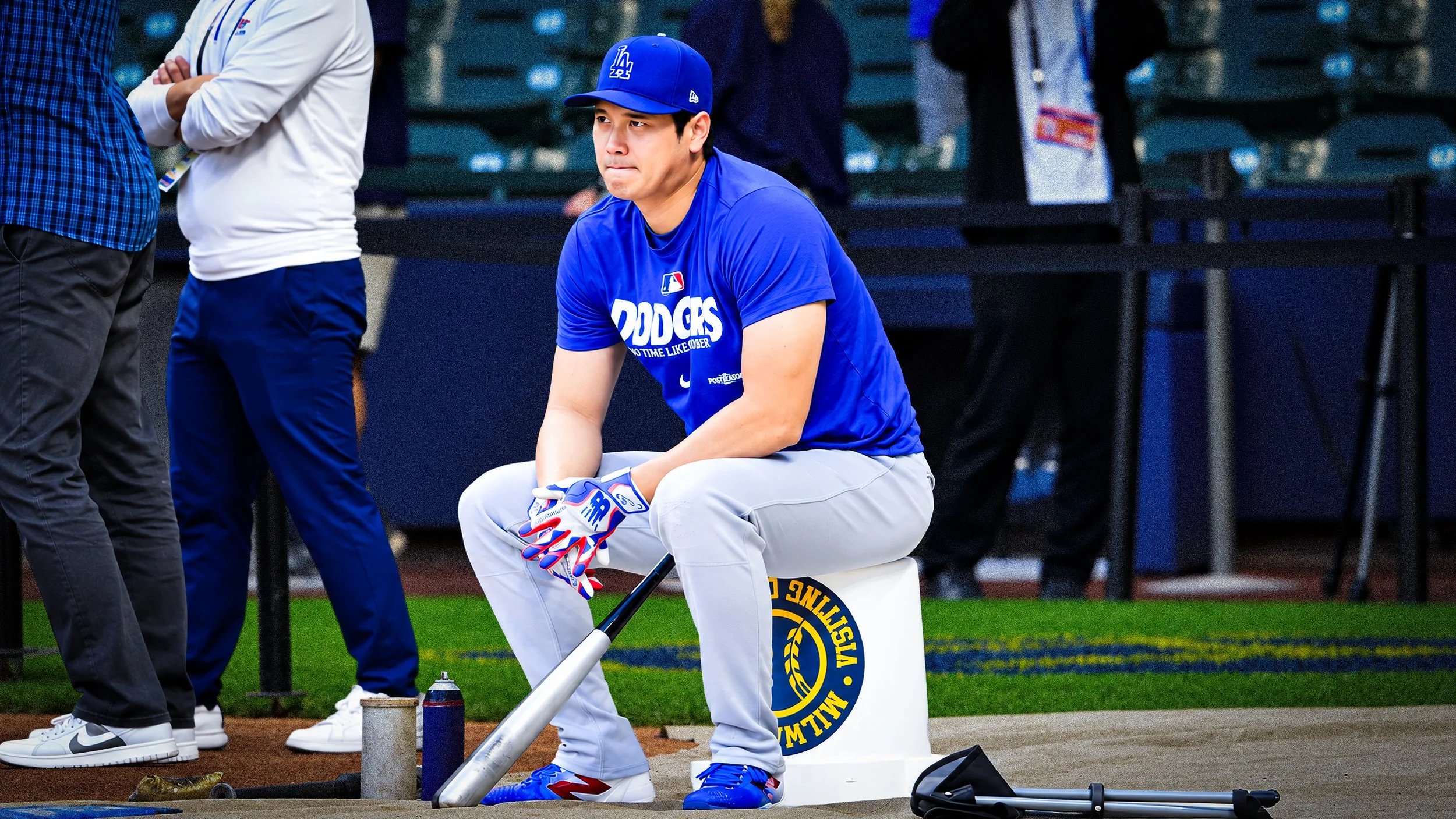
Shohei Ohtani’s difficult 2026 season did not change his plans for the future.
Ohtani confirmed after the Dodgers were eliminated from the National League Championship Series that he intends to return as a two-way player in 2027.
“Yes, definitely,” Ohtani said through interpreter Will Ireton when asked whether he plans to pitch next season.
What remains uncertain is when he will be ready and whether his return to the mound will require an offseason procedure first.
Ohtani said it is still “hard to tell” whether his injured left knee or right biceps will require surgery. The Dodgers and Ohtani will evaluate his options during the offseason before establishing a rehabilitation and throwing schedule.
No procedure has been scheduled, and the Dodgers have not announced an expected date for his pitching return.
Ohtani’s Pitching Season Ended In July
Ohtani looked like a legitimate Cy Young Award candidate during the first half.
He went 8-2 with a 1.79 ERA, recording 95 strikeouts across 85⅔ innings and 14 starts. His last pitching appearance came July 3 against the Padres, when he threw a season-high 110 pitches over six innings.
Ohtani experienced tightness in his right biceps during that game after feeling discomfort on a swing. He was already managing irritation in his left knee, which had required treatment earlier in the season.
The Dodgers initially hoped he would return to the rotation, but his progress repeatedly stalled. Ohtani eventually shifted his focus entirely toward hitting and did not pitch during the final three months or postseason.
His knee remained the primary concern because the Dodgers did not want him altering his delivery to protect his landing leg.
Andrew Friedman said during the season that Ohtani likely would have continued pitching if not for the knee. The concern was that compromised mechanics could create additional stress elsewhere in his body.
That possibility should remain central to the Dodgers’ offseason evaluation.
Surgery Remains A Possibility, Not A Decision
Ohtani did not rule out an offseason procedure after the Dodgers’ elimination.
“It’s something that’s going to be analyzed, discussed over the offseason, and see if that’s a viable thing to do,” Ohtani said.
That is an important change from earlier in the season, when the organization expressed optimism that his knee problem would not require surgery.
It does not mean surgery is now expected.
Ohtani and the Dodgers must determine whether rest and rehabilitation will be enough or whether a procedure offers the better long-term solution. Any decision will also need to account for the recovery demands of hitting and pitching simultaneously.
Until that evaluation is completed, it would be premature to establish an Opening Day target.
Ohtani may be ready to hit before he is ready to pitch. He could also require a gradual buildup similar to previous returns from arm injuries.
The only confirmed plan is that he wants to continue doing both.
Dodgers Must Reconsider Ohtani’s Workload
Ohtani’s intention to pitch again does not require the Dodgers to use him like a conventional starter.
He made 14 starts during the first half while remaining an everyday hitter. The demands of preparing to pitch, recovering between starts and taking regular at-bats placed a unique strain on his body.
“What he’s doing is unprecedented, and it takes a real toll,” Friedman said. “And as you get older, I think us just being very dialed is going to be really important.”
That does not mean Los Angeles should abandon the two-way experiment.
Ohtani’s 1.79 ERA demonstrated how valuable he remains on the mound. A healthy Ohtani gives the Dodgers an elite pitcher without removing one of baseball’s most dangerous hitters from the lineup.
The question is how often the Dodgers need him to start.
A reduced pitching schedule, additional rest between appearances or planned stretches as a designated hitter could protect his body without eliminating the advantage he provides.
The Dodgers could also avoid pushing him deep into games or building him toward a traditional starter’s innings total.
The priority should not be proving Ohtani can handle a full pitching workload. It should be having the strongest possible version of him available in October.
Communication Will Be An Important Part Of The Plan
The Dodgers also need complete information about how Ohtani is feeling.
Friedman previously described communication between Ohtani and the organization as strong overall but acknowledged that Ohtani may not always fully disclose the extent of his discomfort.
That determination is part of what makes him exceptional. It can also make managing his health more difficult.
Ohtani continued playing through discomfort because he believed he could help the Dodgers. He eventually homered in Game 4 of the NLCS, briefly giving Los Angeles hope of extending the series.
But playing through pain does not necessarily provide the greatest long-term value.
The Dodgers may need to become more proactive with scheduled rest rather than relying entirely on Ohtani to say when he cannot continue.
Potential Lockout Could Complicate His Recovery
The current collective bargaining agreement expires December 1, and the possibility of an MLB lockout creates another layer of uncertainty.
If a work stoppage begins, clubs would generally be prohibited from communicating directly with players on their 40-man rosters.
That could prevent the Dodgers from monitoring Ohtani’s rehabilitation, adjusting his treatment plan or overseeing his pitching progression during an important part of the offseason.
A lockout has not been announced, and its length cannot be predicted. However, the possibility makes the timing of Ohtani’s medical evaluation especially important.
If surgery is recommended, the Dodgers and Ohtani would benefit from establishing a detailed recovery plan before communication is potentially interrupted.
Dodgers Need Ohtani Healthy When It Matters
Ohtani’s 2026 pitching performance showed why neither he nor the Dodgers is ready to abandon his two-way role.
His second-half injuries showed why the plan cannot remain unchanged.
The objective for 2027 should not simply be getting Ohtani back on the mound as quickly as possible. It should be creating a workload that allows him to remain effective as both a pitcher and hitter through the entire season.
Ohtani has made his intention clear.
Now the Dodgers must determine the safest and most effective way to make that two-way return possible.
Should the Dodgers continue using Ohtani as a regular starting pitcher, or reduce his workload to protect his bat and keep him healthy for October?