
Dodgers’ Three-Peat Bid Ends With Questions About Aging Core
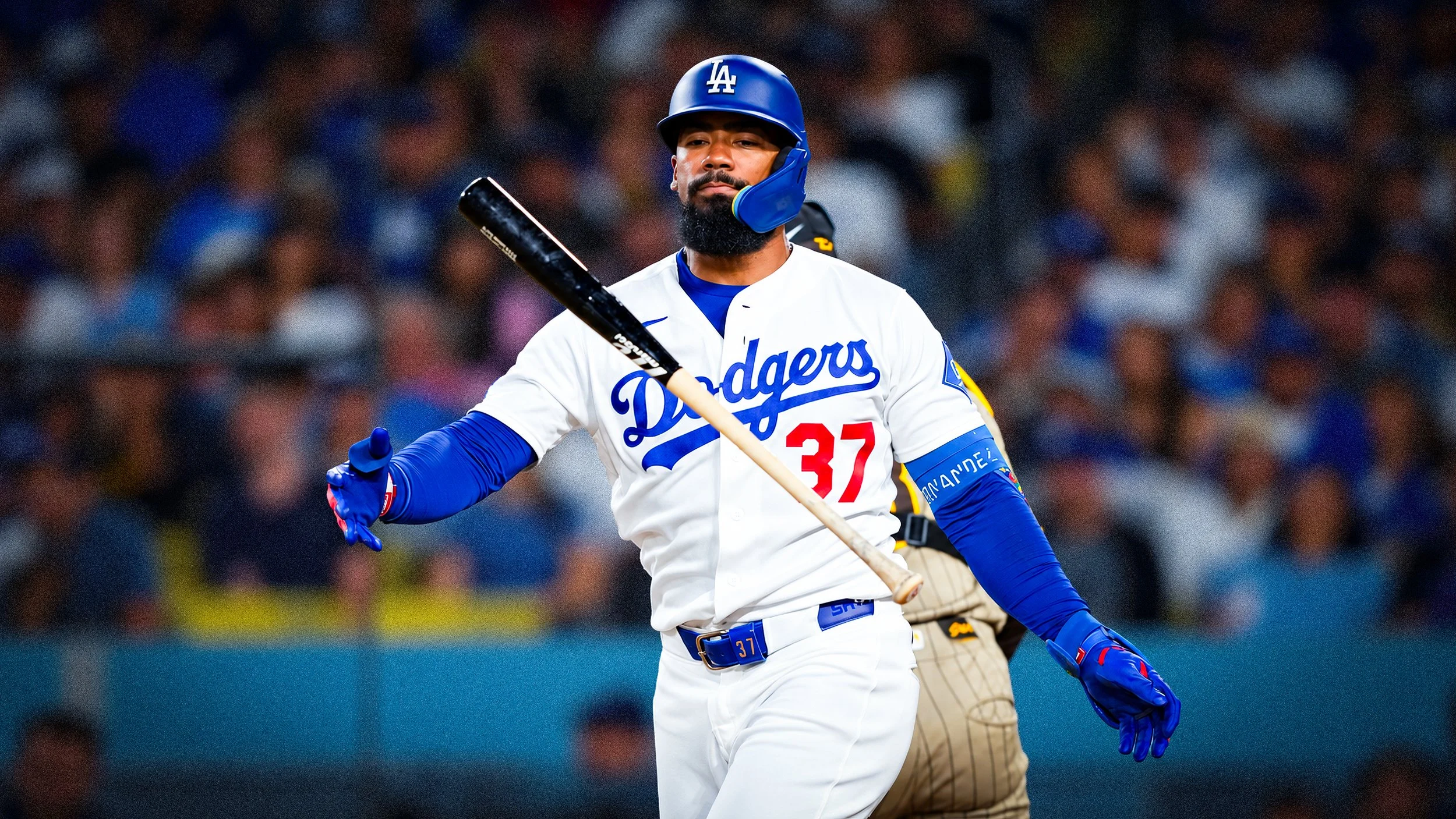
The Dodgers entered October attempting to become the first National League team to win three consecutive World Series championships.
They left it with questions about whether the group that delivered the previous two titles can remain together much longer.
Milwaukee completed a four-game sweep with a 6-4 victory Thursday night at Dodger Stadium, overcoming an early four-run deficit and ending the Dodgers’ pursuit of history.
One bad series does not erase consecutive championships, a 100-win regular season or 14 straight postseason appearances.
It does, however, force Los Angeles to evaluate whether the current roster needs more than another expensive addition.
Game 4 Offered One Final Opportunity
For the first time in the series, the Dodgers appeared ready to take control.
Andy Pages opened the scoring with an RBI single before Shohei Ohtani launched a three-run homer, giving Los Angeles a 4-0 lead in the second inning.
The home run ended the longest homerless stretch of Ohtani’s career and appeared capable of changing the energy surrounding the entire series.
It was the Dodgers’ only home run of the NLCS.
Milwaukee steadily erased the lead against Tyler Glasnow and the bullpen. Jake Bauers delivered a two-run double, David Hamilton added an RBI single and Bauers drew a bases-loaded walk from Alex Vesia to tie the game.
Garrett Mitchell homered against Tanner Scott in the sixth, putting Milwaukee ahead for good. Hamilton added another homer against Edwin Díaz in the ninth.
Even after losing the lead, the Dodgers received opportunities to recover.
Kyle Tucker doubled with one out in the sixth. Pages led off the seventh with another double. Will Smith reached third with one out in the eighth.
None of them scored.
Milwaukee became the first team to complete a best-of-seven postseason sweep despite trailing at some point in all four games.
The Dodgers did not spend the entire series without chances. They simply failed to finish them.
The Offense Failed When It Mattered Most
The Dodgers finished the postseason 5-for-43 with runners in scoring position.
That was not an isolated Game 4 problem. It followed them through the NLDS against Atlanta and became impossible to overcome against Milwaukee.
Los Angeles possessed the more decorated lineup, but Milwaukee consistently produced the better at-bats in critical situations.
Bauers extended plate appearances against Yoshinobu Yamamoto and Blake Snell before delivering defining results. Milwaukee hitters accepted walks, fouled off difficult pitches and punished mistakes.
The Dodgers too often expanded the zone or failed to put the ball in play when a productive out could have changed an inning.
Kyle Tucker was their most consistent postseason hitter, batting .333/.419/.519. The rest of the lineup never produced enough around him.
Ohtani played through left-knee and right-biceps problems. Freddie Freeman continued managing patellar tendinitis. Will Smith returned after missing significant time. Max Muncy, Mookie Betts and Teoscar Hernández were unable to consistently carry the offense.
Age may not explain every unproductive at-bat, but it becomes more difficult to ignore when so many important players are simultaneously managing injuries, declining production or accumulated fatigue.
Dodgers Had Baseball’s Oldest Position-Player Group
The Dodgers entered the postseason with the oldest group of position players in Major League Baseball, averaging 30.9 years old.
Betts is 34. Freeman is 37. Ohtani is 32. Muncy is 36. Teoscar Hernández is 34.
Those players have also endured three consecutive seasons extending deep into October, including World Series runs in 2024 and 2025. The previous two seasons began overseas and ended in the final round.
“The train finally ran out of steam, I guess,” Muncy said after the elimination.
That may be the simplest explanation for what Los Angeles looked like against Milwaukee.
The Dodgers did not suddenly lose their talent. They looked like a team that could no longer consistently turn that talent into the energy, execution and production required to beat a younger opponent.
Age Was Not The Only Reason Dodgers Lost
Blaming the entire sweep on an aging lineup would be too convenient.
The rotation, expected to be the Dodgers’ greatest postseason advantage, finished the NLCS with a 6.50 ERA over 18 innings.
Milwaukee defeated Tarik Skubal in Game 1, forced Yamamoto from Game 2 after only 2⅔ innings, hit three home runs against Snell in Game 3 and erased a four-run lead against Glasnow in Game 4.
The bullpen also failed to preserve leads in the final two games.
Los Angeles did not lose because of one struggling star, one questionable decision or one area of the roster. Milwaukee outplayed the Dodgers offensively, on the mound and in the most important moments.
“Sometimes you just get beat,” Freeman said. “You’ve got to give credit to the Brewers.”
That acknowledgment matters.
Milwaukee won 103 regular-season games. This was not an inferior team stumbling into a fortunate four-game stretch.
But the comprehensive nature of the defeat means the Dodgers cannot dismiss it as random October variance, either.
A Teardown Is Neither Necessary Nor Realistic
Questions about the core do not mean the Dodgers should begin dismantling the roster.
Ohtani, Betts, Freeman, Smith, Tucker and Muncy remain under contract. The rotation still includes Yamamoto, Snell and Glasnow, with Ohtani intending to pitch again in 2027.
The Dodgers will enter next season with enough talent to contend for another championship.
The question is whether they can continue depending on the same veterans to occupy nearly every important role.
Miguel Rojas has already announced his retirement. Kiké Hernández, Tarik Skubal, Alex Vesia, Evan Phillips and several others are approaching free agency.
The organization now has an opportunity to make the roster younger without abandoning the players who helped build it.
Dodgers Must Create A Path For Their Prospects
Josue De Paula gave the Dodgers a glimpse of what their next generation could provide.
He reached the majors directly from Double-A, earned a postseason roster spot and brought an energy that stood out immediately. His defense still requires development, but his bat demonstrated that he may not be far from contributing regularly.
Dalton Rushing and Alex Freeland are also positioned to compete for larger roles. James Tibbs III, Mike Sirota and several other prospects are progressing through the upper levels of the system.
The Dodgers cannot promote every prospect at once, nor should they force younger players into roles they have not earned.
But De Paula cannot receive everyday opportunities if every position remains occupied by an established veteran.
At some point, Los Angeles must decide whether familiarity and past accomplishments are preventing the next group from receiving a genuine opportunity.
The Dynasty Did Not End With One Sweep
Milwaukee ended the Dodgers’ season. It did not erase what Los Angeles accomplished over the previous two years.
Back-to-back World Series championships established this group’s place in franchise history. Calling the entire run over because of four losses would be an emotional conclusion, not a measured one.
But dynasties do not survive by pretending nothing has changed.
The Dodgers must determine which veterans can still carry major roles, which players require reduced workloads and where younger talent can be introduced.
Their championship window remains open.
The NLCS sweep showed that keeping it open may require the Dodgers to begin changing the team that created it.