
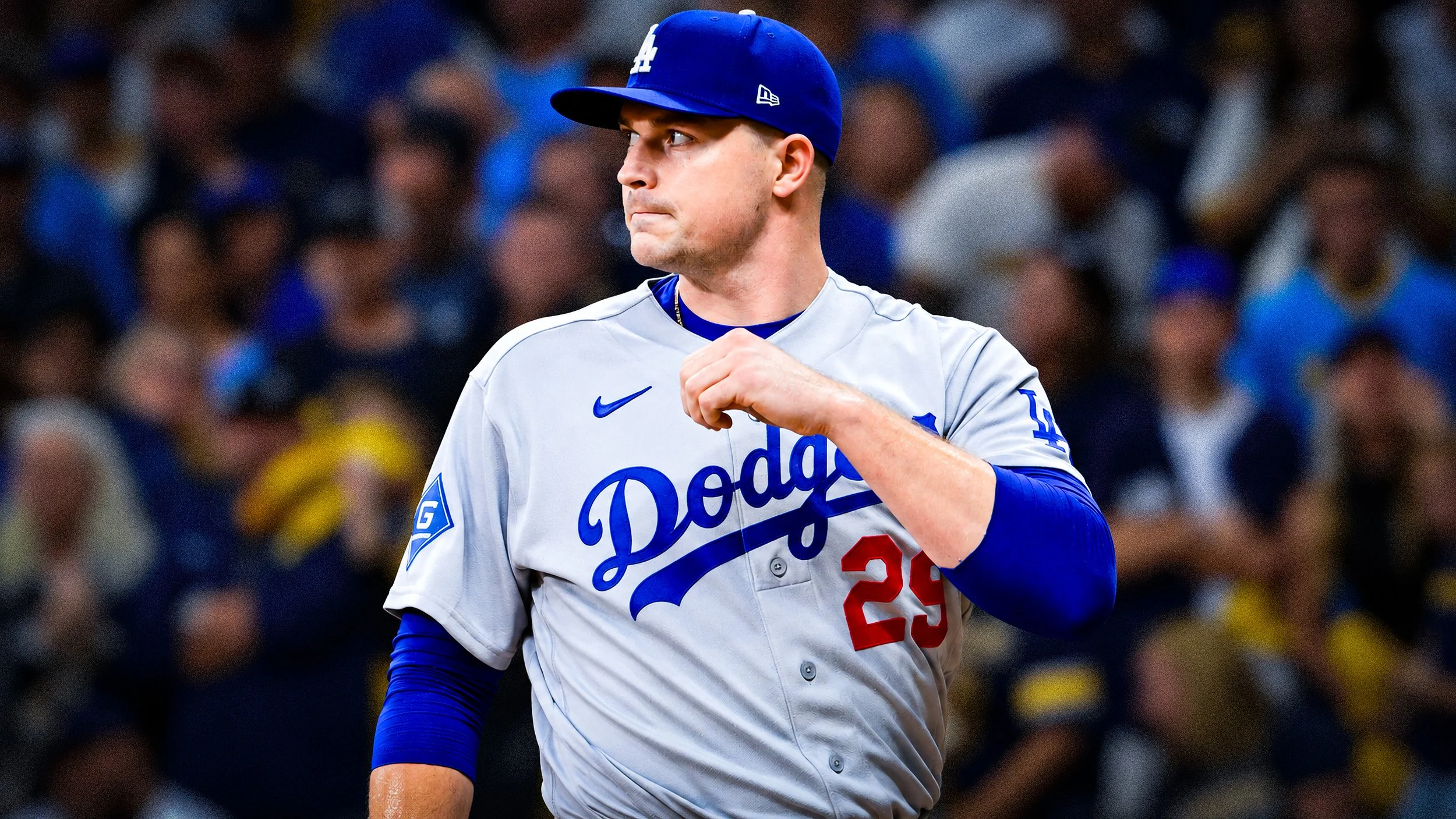
The Dodgers may want Tarik Skubal back, but Katie Woo believes the structure of his next contract could determine whether Los Angeles becomes one of his most aggressive suitors.
During an appearance with Bill Reiter and Doug McKain on 97.1 The Fan LA, Woo explained that she has difficulty envisioning Andrew Friedman committing to the kind of lengthy contract Skubal could command on the open market.
Woo instead identified a shorter agreement with an enormous average annual value and multiple opt-out opportunities as a possible path toward keeping Skubal in Los Angeles.
“The only way I see the Dodgers really being fierce competitors for Skubal is if Skubal is willing to take a deal similar to the structure and the concept with Kyle Tucker,” Woo said.
She suggested a three- or four-year agreement with opt-outs and a significant annual salary could make more sense for the Dodgers than a contract approaching 10 years.
Woo was careful to describe that idea as her early speculation.
She was not reporting that the Dodgers have offered Skubal such a contract, nor that Skubal has expressed a willingness to accept one.
Skubal Has Earned The Opportunity To Pursue A Historic Contract
There is little doubt about Skubal’s position in this free-agent class.
The two-time American League Cy Young Award winner finished the 2026 season with a 12-7 record, 2.72 ERA, 0.96 WHIP and 186 strikeouts over 158⅔ innings between Detroit and Los Angeles.
He was especially valuable after joining the Dodgers in their deadline blockbuster.
Skubal went 5-2 with a 2.61 ERA, 1.05 WHIP and 70 strikeouts across 62 innings in 10 regular-season starts for Los Angeles. He then posted a 2.45 ERA over two postseason appearances.
That performance continued a dominant stretch that began after his return from flexor-tendon surgery in 2023. Over his past 103 regular-season starts, Skubal owns a 50-20 record with a 2.47 ERA.
The Dodgers paid a substantial price to acquire him, sending Zyhir Hope, River Ryan and Brady Smith to Detroit. Hope and Ryan were both ranked among MLB Pipeline’s Top 100 prospects at the time.
That trade does not obligate Los Angeles to outbid the entire market now. The prospects are gone regardless of what happens in free agency.
However, it showed how highly the Dodgers valued the opportunity to add Skubal for their postseason run.
Why A Kyle Tucker-Style Deal Could Appeal To Los Angeles
Tucker signed a four-year, $240 million contract with the Dodgers before the 2026 season. His agreement included opt-outs following the second and third years, a $64 million signing bonus and $30 million in deferred money.
The contract gave Tucker exceptional short-term earning power while allowing him to return to free agency before the end of the deal.
It also prevented the Dodgers from adding another decade-long commitment to a payroll already carrying numerous expensive contracts.
Tucker’s first regular season in Los Angeles did not meet expectations. He hit .233/.330/.385 with a .715 OPS before responding with nine hits and two home runs during the postseason.
His performance did not alter the appeal of the contract’s basic structure. The Dodgers secured a star without guaranteeing money deep into his late 30s, while Tucker retained control over how long he remained with the club.
Woo believes that same general concept could give Los Angeles a path to Skubal.
A shorter contract with an exceptionally high annual salary would allow the Dodgers to compensate Skubal like the best pitcher in baseball without assuming the complete risk of a nine- or 10-year agreement.
Skubal, meanwhile, could collect elite money immediately and potentially reenter the market while still in his early 30s.
Skubal May Prefer The Security Of A Longer Deal
The obvious question is whether Skubal would accept that arrangement.
Skubal will be 29 on Opening Day and is represented by Scott Boras. He has reached free agency as the clear top player in a class that does not offer another comparable star.
That gives Skubal considerable negotiating power.
The largest guaranteed contract ever awarded to a pitcher remains the 12-year, $325 million agreement Yoshinobu Yamamoto signed with the Dodgers. Skubal is widely expected to challenge or surpass that guarantee, and a hypothetical 10-year, $400 million contract has already been discussed within the industry.
That figure should not be treated as an existing offer or confirmed demand from Boras. It illustrates the level of commitment Skubal may be positioned to pursue.
A shorter contract would require him to surrender some long-term security. Even with opt-outs, Skubal would be accepting the risk that an injury or decline could affect his next trip through free agency.
His Medical History Complicates The Long-Term Calculation
Skubal’s performance makes a massive contract understandable, but his medical history gives every interested club something to evaluate.
He underwent Tommy John surgery in college, had flexor-tendon surgery in 2022 and missed approximately six weeks during the 2026 season following another procedure on his left elbow.
He returned from the latest procedure and continued pitching at an elite level. Nothing about his performance with the Dodgers suggested that the elbow prevented him from dominating.
The concern is not what Skubal can do right now. He has established himself as one of baseball’s best starting pitchers.
The question is how much risk a team should accept in Years 7, 8, 9 and 10 of a historic contract.
That is where Woo’s proposed structure becomes particularly relevant. A shorter agreement could reduce the Dodgers’ long-term exposure while still giving Skubal the highest annual salary ever paid to a pitcher.
Friedman Has Not Revealed The Dodgers’ Limit
Friedman has publicly confirmed that the Dodgers plan to continue communicating with Boras, but he has not indicated how far Los Angeles is prepared to go.
“We have a tremendous amount of respect for him on and off the field,” Friedman said during the Dodgers’ end-of-season press conference.
Friedman added that Skubal and his family have earned the opportunity to decide where they want to spend the next phase of his career.
Those comments left the door open without committing the Dodgers to a bidding war.
That makes the eventual structure of Skubal’s market as important as the total amount.
If Skubal prioritizes the largest possible guarantee, another club may be more comfortable offering the years Woo does not expect Friedman to embrace.
If Skubal values a record annual salary, opt-out flexibility and the opportunity to continue pitching for the Dodgers, a Tucker-style proposal could become more realistic.
What Dodgers Fans Should Watch
The first development to monitor is whether Skubal’s market centers on total guaranteed money or annual value.
A conventional long-term bidding war could make a reunion more difficult. A willingness to consider three or four years would immediately make the Dodgers more dangerous.
It will also be important to watch when Skubal wants to sign. Labor uncertainty surrounding the expiration of MLB’s collective bargaining agreement could compress the offseason and encourage top free agents to reach agreements earlier than usual.
Most importantly, fans should distinguish between analysis and confirmed negotiations.
Woo provided an informed explanation of the type of contract she believes could keep the Dodgers involved. She did not report that Skubal has agreed with that approach or that the Dodgers have already presented it.
The Dodgers have the financial ability to re-sign Tarik Skubal. The bigger question is whether they can offer the kind of contract he wants without abandoning their preference for preserving long-term flexibility.
Would you give Skubal a long-term record contract, or would you prefer a shorter deal with a massive annual salary and opt-outs?