
Dodgers Waste Early Chances As Brewers Take NLCS Game 1
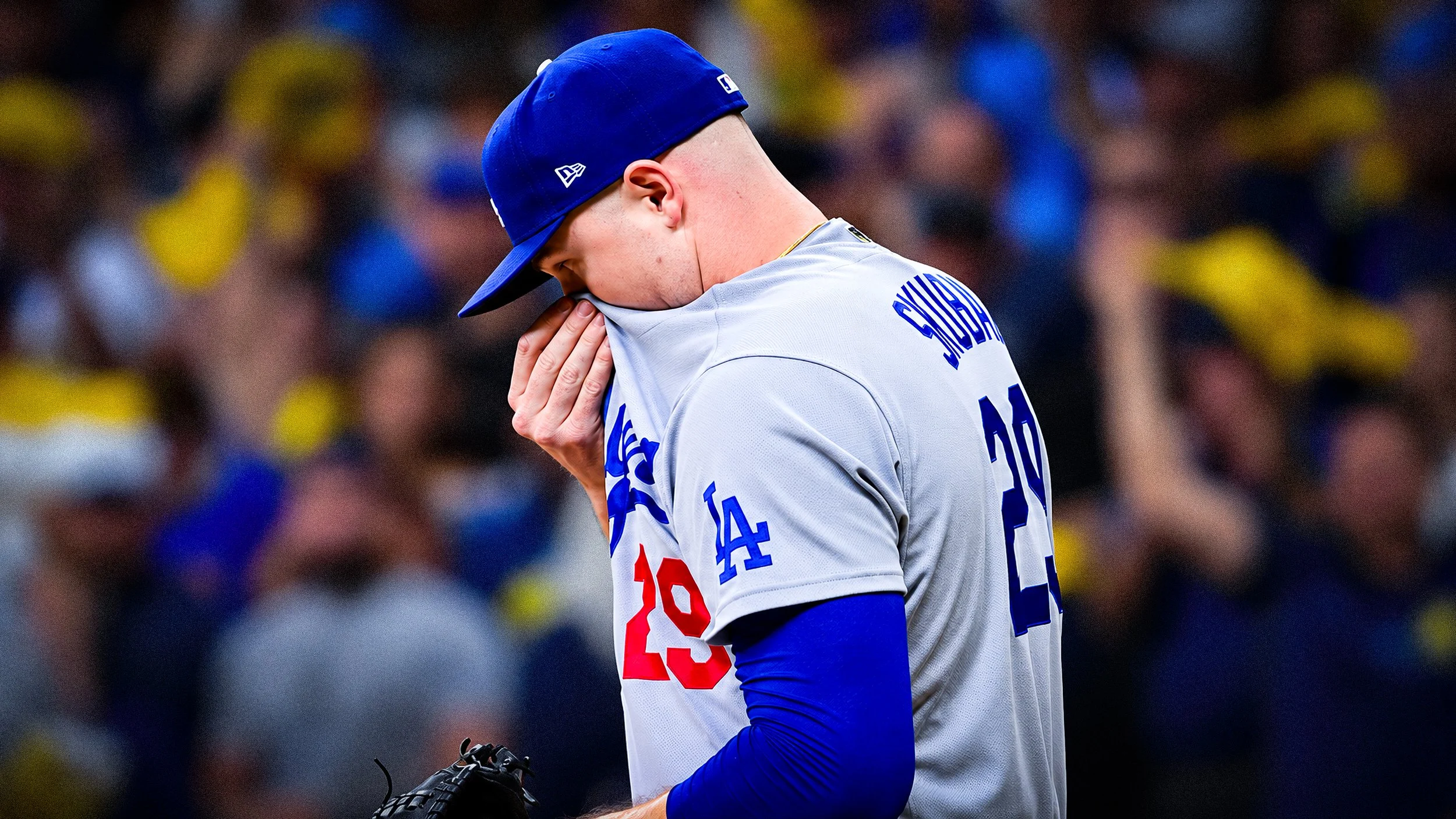
The Dodgers accomplished one of their primary goals against Jacob Misiorowski in Game 1 of the National League Championship Series.
They made him work.
What they failed to do was make all that work matter.
Los Angeles forced Milwaukee’s hard-throwing right-hander to throw 94 pitches and removed him after only 4⅓ innings Sunday, but three double plays and repeated failures with runners aboard allowed the Brewers to escape with a 2-1 victory at American Family Field.
Milwaukee now holds a 1-0 advantage in the best-of-seven series.
The Dodgers had their opportunities. They stranded nine runners, loaded the bases in the second inning and brought the tying run to second base in the ninth.
They simply did not finish enough of those chances.
Dodgers’ Approach Worked Better Than The Result
The Dodgers entered Game 1 determined to avoid chasing Misiorowski’s high-velocity arsenal and allowing him to dominate efficiently.
For the most part, they succeeded.
Los Angeles fouled off 21 pitches, worked six three-ball counts and forced Misiorowski to throw 35 pitches in the second inning alone.
Shohei Ohtani opened that inning with a walk, Teoscar Hernández singled and Andy Pages drove Ohtani home with a one-out single. Kyle Tucker then walked to load the bases, giving the Dodgers a chance to break the game open.
Instead, Kiké Hernández grounded into an inning-ending double play.
That became the theme of the afternoon.
The Dodgers grounded into three double plays during the first five innings, repeatedly erasing baserunners and preventing Misiorowski’s rising pitch count from turning into a substantial lead.
Forcing a starter to throw 94 pitches while recording only 13 outs should normally be considered an offensive victory. In this case, it became a missed opportunity because the Dodgers produced only one run.
The process at the plate was encouraging.
The execution with runners on base was not.
Tarik Skubal Was Dominant Until Milwaukee Adjusted
Tarik Skubal appeared capable of making the Dodgers’ lone run stand during the opening innings.
He allowed only one hit and struck out six while moving through Milwaukee’s lineup the first time. The Brewers struggled to catch up with his fastball and had few answers for his secondary pitches.
That changed when Brice Turang opened the fourth inning with a solo home run on a 2-0 pitch, tying the game.
Milwaukee then manufactured the winning run in the fifth.
Skubal walked Garrett Mitchell to begin the inning. Cooper Pratt moved him into scoring position with a sacrifice bunt, and rookie Luis Lara delivered an RBI single to center.
It was a perfect example of the style that has made Milwaukee so difficult to beat. The Brewers did not need a barrage of extra-base hits. They took advantage of a leadoff walk, advanced the runner and delivered one timely hit.
Skubal completed five innings, allowing two runs on five hits and two walks while striking out seven. It was not a poor performance, but the Dodgers needed something close to perfection because their offense stopped producing after the second inning.
Milwaukee’s Bullpen Protected The Lead
The Dodgers received exactly what they wanted when Misiorowski departed in the fifth inning.
They just could not take advantage of Milwaukee’s bullpen.
DL Hall immediately induced another double play after Misiorowski walked Mookie Betts. Abner Uribe escaped a runners-on-the-corners situation by striking out Pages in the sixth.
Trevor Megill provided one final opening in the ninth.
After retiring the first two hitters, Megill walked Tucker and pinch-hitter Josue De Paula. That brought Betts to the plate with the tying run in scoring position, but he lifted a fly ball to center field to end the game.
Milwaukee’s bullpen supplied 4⅔ scoreless innings. Hall, Aaron Ashby, Uribe and Megill have now combined to allow just one unearned run across 19⅔ innings this postseason.
That dominance creates a clear challenge for the Dodgers: waiting until the late innings to produce offense may not be a sustainable formula in this series.
Dodgers’ Bullpen Delivered An Encouraging Response
The loss should not overshadow the work completed by the Dodgers’ relievers.
Alex Vesia, Evan Phillips and Tanner Scott combined for three scoreless innings, striking out six and keeping the deficit at one run.
That gave the offense repeated opportunities to tie the game.
Edwin Díaz was not needed, which also leaves another high-leverage arm available for Game 2.
The bullpen did its job. The Dodgers lost because they converted only one of their numerous scoring opportunities—not because the game got away from them late.
Game 1 Was An Opportunity The Dodgers Let Slip Away
There is no reason for the Dodgers to panic after one game, but this loss should sting.
They drove Milwaukee’s starter from the game early. Their own bullpen did not allow a run. They put multiple runners on base and brought the potential tying run to the plate in the ninth.
Those are usually the ingredients of a postseason victory.
Instead, Milwaukee won by executing the smaller details more effectively.
The Brewers moved runners, made defensive plays and found the one additional hit they needed. The Dodgers allowed three rallies to disappear on double-play grounders and finished without an extra-base hit.
That is not dominance by Milwaukee.
It is a game the Dodgers had several chances to take—and failed to finish.
Key No. 1 For Game 2: Do Not Let Logan Henderson Settle In
The Dodgers will face rookie right-hander Logan Henderson in Game 2.
Henderson has never allowed more than three runs in any of his 24 career regular-season and postseason starts. He also defeated Los Angeles at Dodger Stadium on August 16, completing seven strong innings.
His changeup presents the biggest problem.
The Dodgers must recognize it out of his hand and avoid rolling over pitches on the ground. Their Game 1 plate discipline was largely productive, but another afternoon filled with ground balls could create the same frustrating result.
Henderson is talented, but the Dodgers cannot allow a rookie to establish a comfortable rhythm during the early innings.
Key No. 2: Turn Baserunners Into Runs
The Dodgers do not necessarily need more traffic on the bases.
They need to do more with the traffic they create.
Nine stranded runners and three double plays will lose most postseason games, especially against a team with Milwaukee’s bullpen.
That does not mean every hitter should become overly aggressive. The Dodgers’ patient approach forced Misiorowski out early and nearly created a ninth-inning comeback.
The adjustment is situational.
With a runner at third and fewer than two outs, the ball must get into the air. With runners moving, hitters must avoid expanding the strike zone and producing weak contact. When Milwaukee provides an opening, Los Angeles has to treat it like the rare opportunity it may become.
Key No. 3: Yoshinobu Yamamoto Must Control Milwaukee’s Running Game
Yoshinobu Yamamoto will be asked to prevent the Dodgers from returning home in a two-game hole.
He enters Game 2 with a 2.14 career postseason ERA, and Los Angeles has won 10 of his 11 playoff appearances. In his previous start, he struck out 10 Braves across seven innings of one-run baseball.
Yamamoto also delivered Major League Baseball’s first complete postseason game in eight years during Game 2 of last season’s NLCS against Milwaukee.
The Brewers will still test him differently than Atlanta did.
Milwaukee showed Sunday that it is willing to bunt, run and place pressure on a defense. Yamamoto must keep leadoff hitters off base, vary his timing and avoid the free passes that can turn into runs without another hard-hit ball.
Skubal’s fifth-inning walk became the winning run in Game 1. Yamamoto cannot offer Milwaukee the same opening.
Key No. 4: The Middle Of The Lineup Must Produce More
Dave Roberts adjusted the Game 2 batting order by moving Teoscar Hernández into the third spot and dropping Will Smith to fifth.
Ohtani remains in the cleanup position.
The Dodgers need that group to deliver more than baserunners. Ohtani recorded a hit and a walk Sunday, while Tucker reached twice, but Los Angeles finished without an extra-base hit.
Smith enters Game 2 with only one hit in 19 postseason at-bats. Freddie Freeman, Max Muncy and the rest of the Dodgers’ experienced October hitters also need to help create damage before Milwaukee can line up its preferred relievers.
Pages has delivered both of the Dodgers’ hits with runners in scoring position this postseason. The entire lineup cannot continue relying on its young center fielder to provide nearly every important hit.
Game 2 Carries Significant Early-Series Pressure
Game 2 is not technically an elimination game, but the difference between returning to Dodger Stadium tied 1-1 and trailing 0-2 is enormous.
Teams losing the first two games of a best-of-seven postseason series have recovered to win only 16 of 95 times.
The Dodgers have the right pitcher to respond. They also showed in Game 1 that they can make Milwaukee’s pitching staff work and create opportunities.
Now they have to complete the final—and most important—part of that equation.
They have to score.
The Dodgers did enough to pressure Milwaukee in Game 1, but October does not reward good intentions or productive at-bats that end without runs. Game 2 will reveal whether Los Angeles can turn its sound approach into the timely execution required to even the series.