
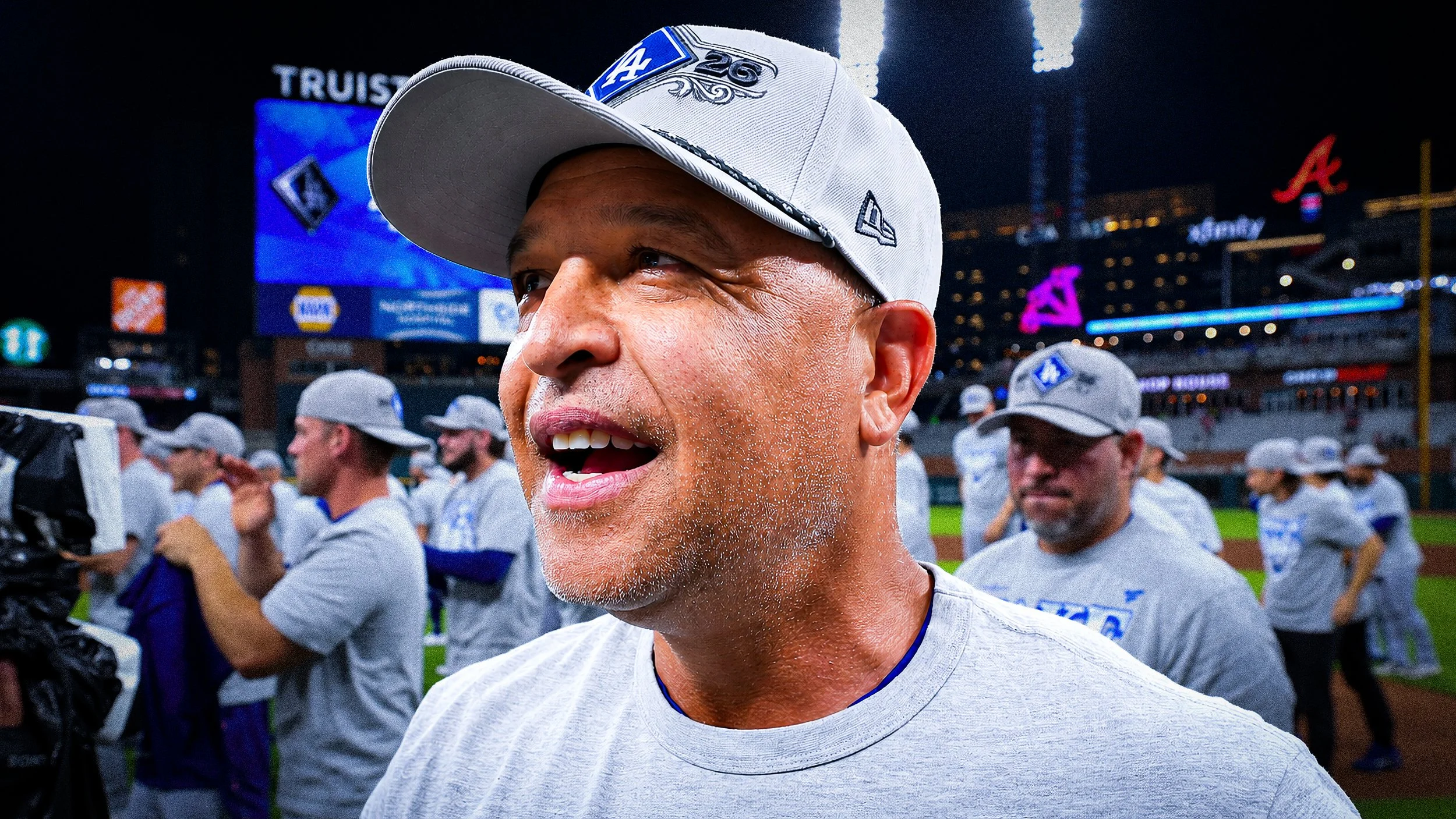
Dave Roberts is now alone in second place on one of baseball’s most significant postseason leaderboards.
The Dodgers’ 4–1 victory over the Braves in NLDS Game 4 was the 72nd playoff win of Roberts’ career, moving him past Tony La Russa for the second-most postseason victories by an MLB manager.
Only Joe Torre has more with 84.
The milestone arrived as Los Angeles eliminated Atlanta in four games and advanced to the National League Championship Series for the third consecutive season.
MLB’s Postseason Wins Leaderboard
Roberts entered the 2026 postseason with 69 playoff victories.
The Dodgers won three of their four NLDS games against Atlanta, allowing him to first tie and then pass La Russa.
The updated all-time leaderboard:
Joe Torre — 84
Dave Roberts — 72
Tony La Russa — 71
Bobby Cox — 67
Dusty Baker — 57
Bruce Bochy — 57
Roberts’ 72 victories include 27 in the Division Series, 24 in the NLCS, 16 in the World Series and five in the Wild Card round.
He has reached that total during 11 seasons with the Dodgers.
“It’s special,” Roberts said before passing La Russa. “I have a lot of respect for Tony and the managers that have done what I’m doing.”
Dodgers Continue Winning Closeout Games
The victory over Atlanta also improved the Dodgers to 19–9 in games in which they have had an opportunity to close out a postseason series under Roberts.
That .679 winning percentage compares favorably with the rest of MLB, which is 92–88 in potential series-clinching games since 2016.
It is an important part of the record because postseason success is not simply about reaching October or accumulating games.
Teams still have to finish series.
Los Angeles has repeatedly done that under Roberts, whether entering as the overwhelming favorite or navigating a roster affected by injuries and inconsistent performances.
The Dodgers won Game 4 despite their first four hitters going 0-for-15. Tyler Glasnow walked five batters. The offense finished the NLDS with only one hit in 16 at-bats with runners in scoring position.
Roberts still found a way to piece together the necessary outs and runs.
Alex Vesia entered to strand two runners in the fifth. Edgardo Henriquez handled four outs. Josue De Paula drew a pivotal pinch-hit walk, and Andy Pages delivered the go-ahead two-run single.
That is the less visible part of Roberts’ postseason record: managing through games in which the Dodgers are not operating at their best.
The Playoff Format Deserves Context
Postseason records across different eras are never perfect comparisons.
Modern teams have more rounds and more opportunities to collect victories. The League Championship Series was played as a best-of-five before expanding to seven games in 1985, and earlier generations did not have Division Series or Wild Card rounds.
Roberts has benefited from managing during an expanded postseason era.
He has also had talented, expensive rosters capable of reaching October almost every season. The Dodgers’ front office and ownership have consistently provided him with championship-level personnel.
Those advantages should be acknowledged.
They do not make 72 postseason wins automatic.
Several teams spend heavily without consistently advancing. Talented rosters still lose short series, and every decision receives greater scrutiny when expectations begin with winning the World Series.
Roberts has turned those opportunities into five National League pennants, three World Series championships and eight NLCS appearances in 11 seasons.
The format gave him opportunities. The Dodgers still had to win the games.
Roberts Continues To Face Heavy Criticism
Few people in baseball receive more scrutiny for individual postseason decisions than Roberts.
Every pitching change, lineup adjustment and pinch-hitting decision is examined against the expectation that the Dodgers should win because of their talent.
Some of that criticism has been justified.
Roberts has made postseason decisions that did not work, and the Dodgers have experienced early exits during seasons in which they appeared capable of winning a championship.
Those failures are part of his record.
So are 72 victories.
So are championships in 2020, 2024 and 2025.
So is a 19–9 record with a chance to eliminate an opponent.
The argument does not need to be that Roberts has been flawless. He has not.
The more reasonable conclusion is that a person cannot fairly evaluate his October history by remembering only the pitching changes that failed while treating every successful decision as the expected outcome of having a talented roster.
Torre’s Record Remains Out Of Reach This October
Roberts is now 12 victories behind Torre.
Even if the Dodgers win eight more games and complete their three-peat, Roberts would finish the 2026 postseason with 80 career playoff victories—four short of the record.
That means he cannot catch Torre this October.
However, another championship run would place him within striking distance in 2027.
For now, the larger goal matters more than the individual record.
The Dodgers are returning to the NLCS and remain eight victories away from becoming the first National League team to win three consecutive World Series championships.
Roberts will receive credit for some of those wins and criticism for nearly every difficult decision along the way.
The historical record now provides its own answer about the overall results.
Dave Roberts has won more postseason games than every manager in MLB history except Joe Torre—and he is not finished yet.