
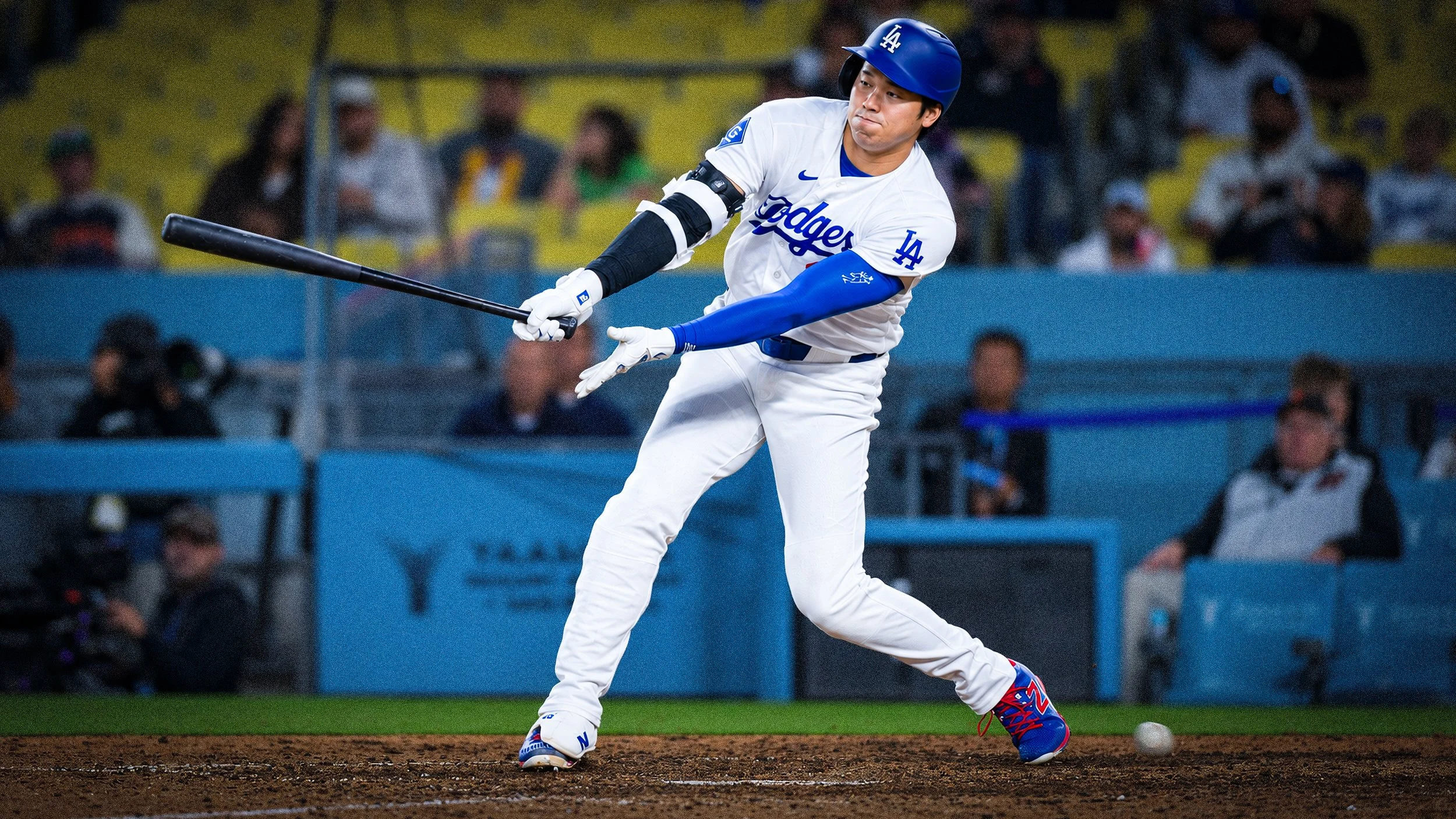
The Dodgers’ offseason cannot be reduced to whether they retain Tarik Skubal, trade Teoscar Hernández or find another shortstop.
Those decisions matter.
But the deeper question facing Los Angeles is what kind of team it wants to become in 2027.
That question drove the latest episode of Blue Dynasty Unplugged, hosted by George Contoyannis alongside Bobby Hainline, Sam Baez and new Blue Dynasty contributor Rilen. Drea—better known as Ravine Queen from the Dodgers Bleed Los Podcast—joined the group as the episode’s special guest.
The discussion covered Skubal’s free agency, possible trades involving established Dodgers, Aaron Bates’ departure, the lineup’s October collapse and Major League Baseball’s proposed salary-cap system.
Together, those topics pointed toward a much larger issue.
The Dodgers remain one of baseball’s most talented teams, but talent alone did not prevent their offense from becoming predictable, inefficient and increasingly dependent upon one big swing.
Aaron Bates’ Departure Creates An Opportunity—Not An Easy Scapegoat
The timing of the episode coincided with the news that the Dodgers and co-hitting coach Aaron Bates were parting ways after failing to reach an agreement on a new contract.
The change was unexpected because Andrew Friedman had previously indicated that he anticipated relative continuity throughout the coaching staff.
Bates spent 12 years in the organization and served as a co-hitting coach alongside Robert Van Scoyoc during the past four seasons. The Dodgers ranked among the top four Major League teams in runs during each of those seasons, and Van Scoyoc is expected to return.
Bates’ departure should therefore not be characterized as the Dodgers simply firing their hitting coach because the offense failed in October.
According to reporting on the negotiations, Bates rejected an initial multiyear proposal that his representatives did not consider competitive. The sides remained far apart and did not exchange another formal offer. mlb.com
That distinction matters.
The Dodgers still have an opportunity to bring a different voice into the hitting department, but replacing Bates will not automatically solve every offensive problem.
Drea floated former Dodger J.D. Martinez as an intriguing possibility because of his reputation as a knowledgeable hitter and his existing relationship with Mookie Betts. She also made it clear that this was her suggestion—not a report that Martinez is being considered for the position.
Whoever joins the staff will inherit an offense that was highly productive over the entire season but disappeared when Los Angeles needed it most.
Dodgers’ Regular-Season Production Hid October Problems
The Dodgers finished the regular season fourth in runs, second in OPS and second in wRC+.
Those are not the results of a bad offense.
They nevertheless finished the postseason 5-for-43 with runners in scoring position before Milwaukee completed its NLCS sweep. The Dodgers hit only .185 during the four-game series. Los Angeles Times
They also grounded into 128 double plays during the regular season, the third-highest total in baseball. StatMuse
Those failures became a major part of the Unplugged discussion.
Bobby questioned how much any hitting coach can do about double plays and repeated failures with runners in scoring position. Sam argued that responsibility cannot fall entirely on the coaching staff when accomplished Major League hitters fail to execute.
Both points can be true.
Coaches cannot control where every batted ball goes. They also cannot take an at-bat for a struggling player.
But the Dodgers can examine whether their overall offensive philosophy helped them adjust when their usual formula stopped producing.
Los Angeles Cannot Depend Entirely On The Big Swing
Drea identified the central question facing the Dodgers’ offense: were they simply an excellent team that went cold, or were they attempting to play a style of baseball that no longer matched their personnel?
Los Angeles has built its offensive identity around power, patience and damage.
That approach has been extremely successful. The Dodgers should not suddenly transform themselves into a team that sacrifices outs or avoids swinging for extra-base hits.
October exposed the limitations of depending almost exclusively on that formula.
Milwaukee consistently worked counts, moved runners and trusted the next hitter to complete the sequence. The Dodgers too often appeared to search for one swing capable of changing the entire game.
Sam focused specifically on approach.
She questioned why certain Dodgers attacked the first pitch from a new reliever instead of forcing him to establish command. Her broader argument was that each hitter must understand his role instead of attempting to become the hero of every important at-bat.
That does not necessarily mean more sacrifice bunts.
It means becoming more adaptable.
The Dodgers need hitters capable of shortening their swings with two strikes, advancing runners without surrendering unnecessary outs and taking advantage when an opposing pitcher is struggling to find the zone.
Their previous formula remains capable of producing 100 victories.
The concern is whether it gives them enough alternatives when October pitching takes away the home run.
Teoscar Hernández Represents The Difficult Transition Ahead
Few players represent the Dodgers’ offseason conflict better than Hernández.
Trading him could open left field for Josue De Paula, improve the defense and make the roster younger.
Moving him would also remove an experienced right-handed hitter who has delivered several important postseason moments and remains one of the team’s better options against left-handed pitching.
Sam previously supported using Hernández as a trade piece but reconsidered after examining what the Dodgers would lose.
Her argument went beyond his immediate production.
If the Dodgers want young players such as De Paula and James Tibbs III to become part of their next core, experienced veterans can help guide that transition. Creating playing time for prospects does not require removing every established player at once.
Rilen acknowledged the emotional side of those decisions. Hernández, Tommy Edman and Tyler Glasnow have all created lasting memories for Dodgers fans, but sentiment cannot be the only consideration when Los Angeles evaluates an aging roster.
That is the balance Friedman must find.
The Dodgers need to become younger without dismantling a team that remains capable of winning the World Series.
Skubal Remains The Dream—But Not The Entire Plan
Nearly everyone on the episode identified retaining Skubal as the Dodgers’ biggest offseason wish.
That is understandable.
Skubal finished 2026 with a 2.72 ERA, 0.96 WHIP and 186 strikeouts across 158⅔ innings. After joining Los Angeles, he recorded a 2.61 ERA in 10 regular-season starts.
The Dodgers, Mets and several other contenders are expected to pursue him, and his contract could establish new records for a pitcher. Skubal described his brief time in Los Angeles positively after the season, but he did not commit to returning. mlb.com
As we explored in our report on Skubal’s possible $400 million market, there is reason to believe he enjoyed pitching for the Dodgers. That still does not guarantee Los Angeles will present the strongest offer or that Skubal will accept it.
Drea believes the uncertainty surrounding baseball’s labor negotiations could motivate Skubal and agent Scott Boras to complete a deal before the current collective bargaining agreement expires.
That is a reasonable possibility, not an established deadline.
Retaining Skubal would give the Dodgers an extraordinary rotation. It would not answer their questions in left field, improve their situational hitting or correct the bullpen’s matchup concerns.
He can be their biggest priority without becoming their only plan.
A Salary Cap Would Change More Than Dodgers’ Spending
The episode’s most forceful discussion arrived when the group turned toward MLB’s latest economic proposal.
MLB has proposed implementing a $258.2 million salary cap and $180.2 million floor beginning in 2028. Under that model, lower-payroll teams would be required to spend more while clubs such as the Dodgers would face a firm limit.
The proposal has not been accepted.
The MLB Players Association remains strongly opposed to a cap and argues that delaying its implementation until 2028 does not address its fundamental concerns. mlb.com
Drea argued that the public conversation too often treats the Dodgers’ willingness to spend as the problem while ignoring owners who receive shared revenue but decline to reinvest aggressively in their rosters.
Sam agreed, arguing that Los Angeles exposed what can happen when an ownership group invests heavily in players, development and the organization surrounding them.
Their point was not that every team possesses the Dodgers’ market advantages.
Los Angeles has an enormous local media market, international appeal and revenue opportunities that smaller clubs cannot easily duplicate.
But a salary floor would not give the Dodgers additional money to spend. A hard cap would restrict their ability to exceed the proposed limit regardless of how much ownership was willing to invest.
We examined that distinction more thoroughly in our breakdown of how MLB’s proposed cap could reshape the Dodgers.
For now, it remains a bargaining proposal—not the future economic system of baseball.
Dodgers Need Evolution Without Overreaction
Milwaukee deserved credit for eliminating the Dodgers and eventually winning the World Series.
The Brewers did not win simply because Los Angeles failed.
They controlled at-bats, applied constant pressure and refused to allow the Dodgers’ reputation or payroll to intimidate them.
Drea described the experience as watching Milwaukee do to the Dodgers what Los Angeles had previously done to other postseason opponents.
That may be the most useful lesson from the series.
The Dodgers do not need to abandon their power. They do not need to trade every veteran or find a scapegoat for four bad games.
They need more ways to win.
That could mean introducing younger, more athletic players without forcing them into roles they are not ready to handle. It could mean finding another hitter who balances the lineup against left-handed pitching. It could mean changing the way hitters approach high-leverage at-bats.
It may also require accepting that October failure does not always have one simple explanation.
Bates’ departure gives the Dodgers an opportunity to introduce a different offensive voice. Skubal’s free agency gives them an opportunity to preserve the strongest possible rotation. Their prospect depth gives them an opportunity to become younger without stepping away from championship contention.
None of those decisions will matter as much as making the pieces work together.
The Dodgers already possess enough talent to return to October. Their offseason challenge is building a team capable of adjusting once it gets there.
What should be the Dodgers’ biggest priority: retaining Skubal, changing the offensive approach or creating more opportunities for their young players?
The full conversation is available on the latest episode of Blue Dynasty Unplugged, hosted by George Contoyannis with Bobby Hainline, Sam Baez, Rilen Luna and special guest Drea from the Dodgers Bleed Los Podcast.