
Dodgers Fall Into 0-2 NLCS Hole After Brewers Take Game 2
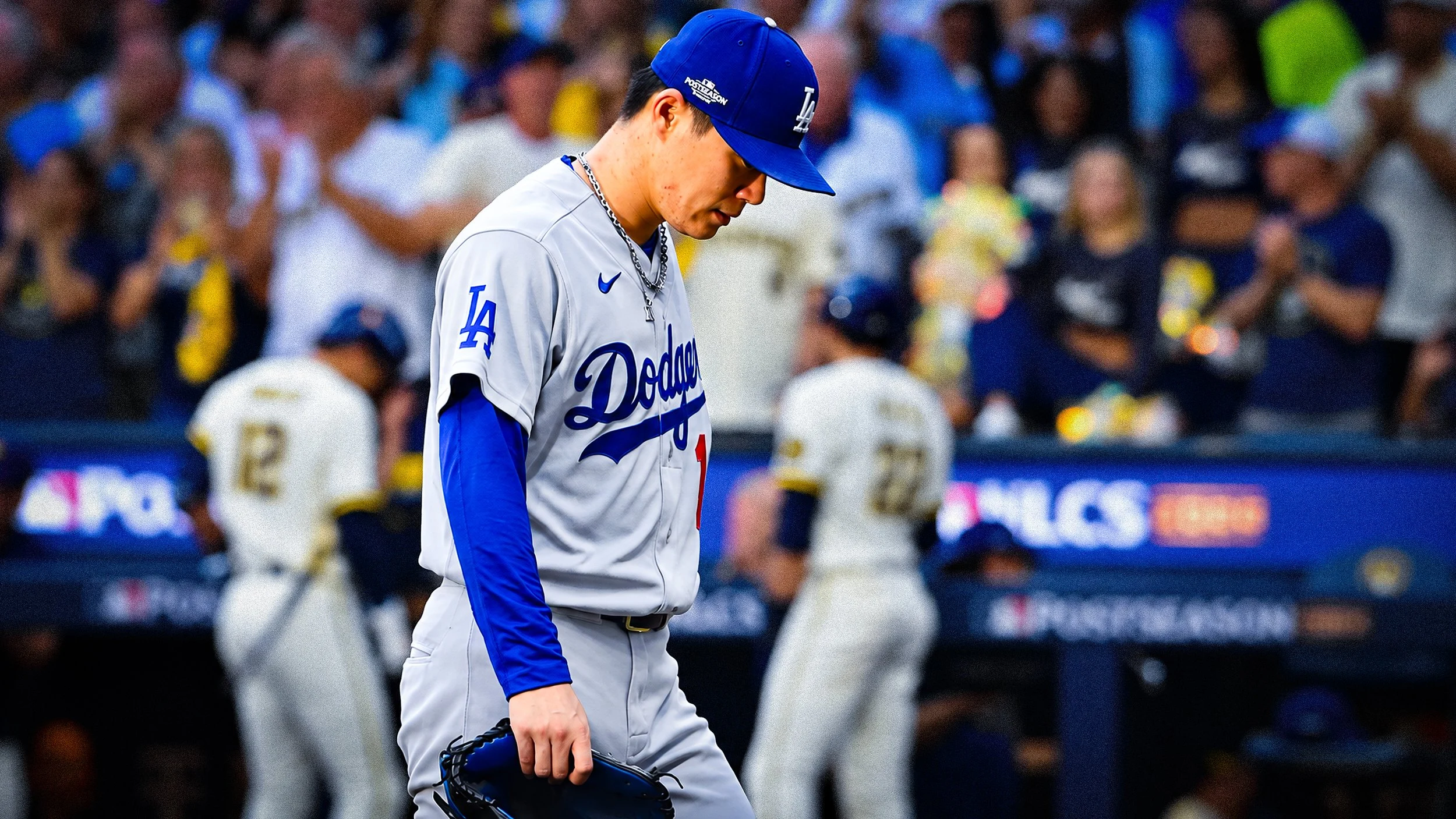
The Milwaukee Brewers tried several times to give the Dodgers control of Game 2.
Los Angeles never truly took it.
The Dodgers scored four runs despite collecting only three hits, benefiting from two throwing errors by Milwaukee starter Logan Henderson and briefly holding three separate leads. But Yoshinobu Yamamoto could not provide a shutdown inning, the offense disappeared against the Brewers bullpen and Milwaukee pulled away for a 7-4 victory Monday at American Family Field.
The Dodgers will return to Los Angeles trailing 2-0 in the National League Championship Series.
They are not finished.
But their pursuit of a third consecutive World Series championship is officially in serious trouble.
Dodgers Take An Early Lead But Cannot Hold It
The Dodgers struck first for the second consecutive game.
Mookie Betts reached base in the opening inning and advanced to third on a wild pitch before Teoscar Hernández brought him home with a sacrifice fly.
The lead lasted only a few minutes.
Brice Turang doubled in the bottom half of the inning and William Contreras tied the game with an RBI single.
Los Angeles moved back in front during the third. Tommy Edman and Betts opened the inning with consecutive singles before Henderson threw wildly to first on a pickoff attempt, allowing Edman to score.
Once again, Milwaukee immediately answered.
David Hamilton singled and stole second before Turang worked his way back from an 0-2 count to draw a walk. Yamamoto nearly escaped, but Jake Bauers extended the inning with a remarkable 12-pitch plate appearance, fouling off six consecutive full-count pitches before earning another walk.
Two pitches later, Christian Yelich lined a hanging curveball into center field for a two-run single and a 3-2 Milwaukee lead.
Yamamoto’s afternoon was over after only 2⅔ innings.
Yoshinobu Yamamoto Could Not Finish Hitters
Yamamoto entered Game 2 with a reputation for delivering when the Dodgers needed a response.
He had gone 3-0 with a 1.23 ERA in three previous postseason starts following a Los Angeles loss. He had also completed at least six innings while allowing no more than one run in four consecutive playoff starts.
None of that carried into Monday.
Yamamoto allowed three runs on four hits and two walks while throwing 75 pitches to record only eight outs. It was his shortest postseason start since joining the Dodgers.
Milwaukee did not overwhelm him with immediate damage. The Brewers repeatedly extended plate appearances after falling behind in the count and forced Yamamoto to execute one more pitch.
He could not consistently do it.
The Bauers walk was the clearest example. Yamamoto had several chances to end the inning, but Bauers kept surviving until the right-hander finally missed outside the strike zone.
Yelich then punished the mistake that followed.
The Dodgers did not need Yamamoto to throw a complete game. They did need him to provide more than eight outs, especially after Tarik Skubal lasted only five innings in Game 1.
Instead, their highly regarded rotation has combined to cover just 7⅔ innings through two games.
That was not how Los Angeles expected this series to unfold.
Missed ABS Challenges Added To The Frustration
The Dodgers may also regret failing to challenge two called balls during Turang’s plate appearances.
A 2-2 pitch in the first inning appeared to catch the strike zone but went unchallenged. Turang doubled later in the at-bat and eventually scored Milwaukee’s first run.
Another apparent strike went unchallenged during Turang’s third-inning plate appearance. He eventually walked and scored on Yelich’s single.
Those moments mattered, but they should not become an excuse for the loss.
Will Smith and Yamamoto needed to recognize the opportunity and properly initiate the challenges. Even after both calls, the Dodgers still had chances to complete the at-bats and escape the innings.
The Brewers simply executed better after receiving the additional pitches.
Milwaukee Nearly Handed The Game Back
Despite Yamamoto’s short outing, the Dodgers regained the lead in the fifth inning.
Kyle Tucker opened the frame with a double. Edman attempted to move him over with a sacrifice bunt, but Henderson fielded the ball and threw it away, allowing Tucker to score and Edman to advance to second.
Freddie Freeman later brought Edman home with a sacrifice fly that narrowly beat the throw to the plate, giving Los Angeles a 4-3 advantage.
Henderson exited having allowed four runs in four-plus innings, but only two were earned.
The Dodgers had taken advantage of Milwaukee’s mistakes, which is exactly what a postseason team should do.
The problem was that Los Angeles still had not produced a run-scoring hit.
All four Dodgers runs came through two sacrifice flies and two throwing errors.
That is opportunistic baseball. It is not a dependable offensive formula.
William Contreras Controlled Game 2
Every time the Dodgers moved ahead, Contreras responded.
His first-inning single erased their initial lead. His fifth-inning home run against Kris Bubic tied the game at four. His sixth-inning single against Brock Stewart brought home Hamilton and gave Milwaukee the lead for good.
Contreras finished with three hits and three RBIs. Each hit either tied the game or put Milwaukee ahead.
His performance stood in sharp contrast to the Dodgers’ own offensive stars.
Contreras matched the Dodgers’ entire hit total by himself.
The Brewers added breathing room in the eighth when Turang and Bauers delivered RBI singles against Edgardo Henriquez and Justin Wrobleski, producing the first three-run advantage of the series.
Milwaukee finished with 12 hits and went 6-for-15 with runners in scoring position.
The Dodgers went 0-for-4 in those situations.
That difference—not Henderson’s errors or the missed challenges—explains Game 2.
Brewers Bullpen Was Completely Untouchable
Once Henderson departed, the Dodgers did not place another runner on base.
Dustin May, JoJo Romero, Abner Uribe and Aaron Ashby combined to retire all 15 hitters they faced. Their five perfect innings represented the most ever completed by a bullpen in a postseason game.
There were no late rallies.
There were no threatening walks.
There was no dramatic opportunity with the tying run at the plate.
Milwaukee’s bullpen recorded seven strikeouts and turned a one-run game into a comfortable victory while the Brewers’ offense added insurance.
Through two NLCS games, Milwaukee’s relievers have covered 9⅔ innings. The Dodgers have not scored an earned run against them.
Los Angeles cannot continue treating the early innings like an opportunity to slowly settle into the game. If the Brewers hand a lead to their bullpen, the available comeback window may already be closed.
Dodgers’ Offensive Problems Are Bigger Than One Game
The Dodgers are batting .193 through their first six postseason games.
They are 2-for-26 with runners in scoring position, with Andy Pages accounting for both hits. The rest of the team is a combined 0-for-23 in those situations.
Shohei Ohtani went 0-for-4 with two strikeouts in Game 2 and is now 3-for-20 this postseason. All three hits have been singles.
Smith also went hitless in four at-bats, leaving him 1-for-23 with eight strikeouts.
Betts is 5-for-21 without an extra-base hit. Freeman has one hit in his last 11 at-bats.
Those are not role players being asked to carry an offense beyond their ability. Those are the players around whom this lineup was constructed.
Roberts admitted he did not have a simple explanation for the lack of production, saying Milwaukee is finding ways to win pitches more consistently.
That may be the most accurate description.
The Dodgers are not consistently chasing terrible pitches or giving away every at-bat. They are simply being beaten within the strike zone and failing to punish enough mistakes.
At some point, respectable at-bats must become production.
Our Take: This Is No Longer A Small Slump
One quiet game can be dismissed.
Two quiet games can be credited to a strong opponent.
Six postseason games featuring a .193 team batting average and two total hits with runners in scoring position represent something more concerning.
The Dodgers look caught between approaches. They are attempting to remain patient, but too many hittable pitches are passing through the zone. When they become aggressive, the contact has frequently been defensive or poorly directed.
Milwaukee is playing with purpose.
Its hitters are extending at-bats, fighting through two-strike counts and putting pressure on every Dodgers pitcher. Its bullpen is attacking without fear because it knows the offense has provided little margin for error.
The Dodgers appear to be waiting for one swing to wake everyone up.
That swing may eventually come, but they can no longer assume there will be enough time afterward to save the series.
Blake Snell Must Give The Dodgers Length In Game 3
Blake Snell is expected to start Game 3 against Robert Gasser on Wednesday at Dodger Stadium.
The simplest key is also the most important: Snell must pitch deep into the game.
Skubal and Yamamoto have combined to record only 23 outs. That has forced Roberts to cover more than eight innings with his bullpen during the first two games.
The Dodgers have enough relief depth to survive an occasional short start. They cannot build an entire series around four- and five-inning outings from the rotation.
Snell must control his pitch count, avoid unnecessary walks and give Los Angeles an opportunity to deploy its best relievers with a lead.
The Dodgers Must Create Their Own Offense
Milwaukee committed three costly throwing mistakes in Game 2.
The Dodgers still lost by three runs.
That should be an alarming realization.
Los Angeles cannot count on Gasser or Milwaukee’s defense to provide another collection of free runs. The Dodgers need extra-base hits, productive contact with runners aboard and contributions from the top half of the order.
That begins with Betts, Freeman and Ohtani.
There will be attention surrounding Ohtani’s place in the Game 3 lineup after his slow start. Whether he starts or sits, the larger problem remains unchanged: the Dodgers need their accomplished hitters to stop waiting for someone else to change the series.
Game 3 Is Not Technically An Elimination Game—But It Feels Close
Teams taking a 2-0 lead in a best-of-seven postseason series have advanced 83 percent of the time.
That history does not make a Milwaukee pennant inevitable. Sixteen teams have recovered from this position, including two within the previous three postseasons.
The Dodgers also know what a comeback looks like. They lost the first two games of the 2020 NLCS before eventually overcoming a 3-1 deficit against Atlanta.
But history will not take a single at-bat Wednesday.
The Dodgers must win pitches, produce hits with runners aboard and finally prevent Milwaukee from answering immediately after they score.
Returning to Dodger Stadium should help. Having Snell on the mound should help.
Neither will matter unless the lineup begins performing like the one Los Angeles expected to carry into October.
The Brewers did not merely protect home field—they exposed the Dodgers’ greatest postseason concern. Los Angeles has the names, experience and talent to recover, but through two NLCS games, Milwaukee has been the team producing the tougher at-bats, bigger hits and cleaner innings. Game 3 is where the Dodgers must prove this series can still change.