
Dave Roberts Challenges Josue De Paula To Become Complete Player
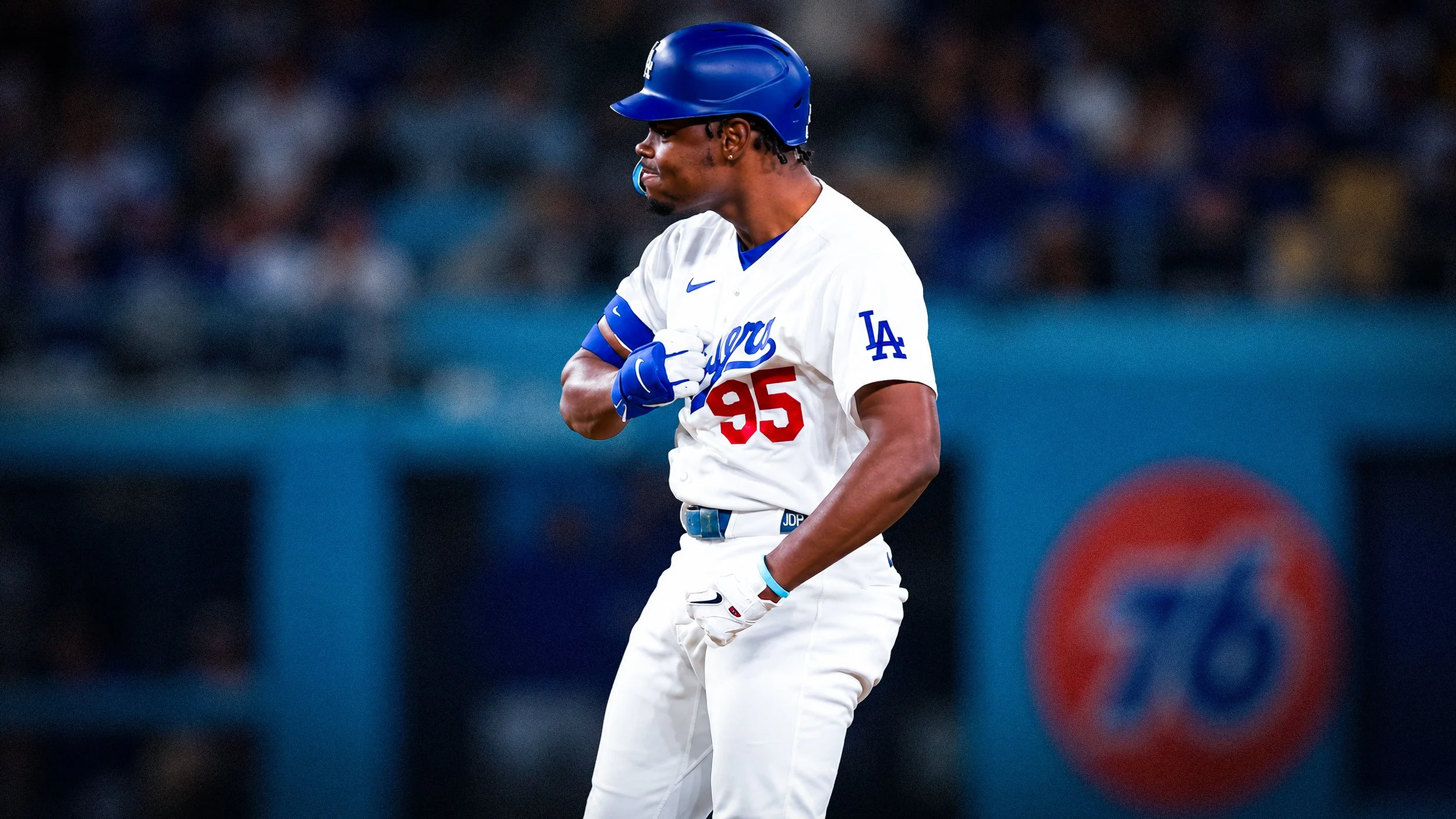
Josue De Paula has already demonstrated why the Dodgers were willing to promote him directly from Double-A.
Now Dave Roberts wants the 21-year-old to prove he can contribute in more ways than one.
After De Paula said he intended to silence criticism surrounding his defense, Roberts offered a direct response.
“That’s how you do it,” Roberts said. “You perform better, you practice hard.”
Roberts’ comments were not an attempt to embarrass De Paula or minimize the impact he has made offensively. They were a challenge to one of baseball’s most talented young players: develop into someone the Dodgers can trust on both sides of the ball.
Roberts Wants De Paula To Become More Than A Hitter
De Paula’s bat is the reason he reached the majors without ever appearing in Triple-A.
He batted .303 with a .948 OPS, 27 home runs, 104 RBI, 106 runs and 31 stolen bases across 124 games for Double-A Tulsa before receiving his first Major League promotion.
The aggressive move has not appeared too big for him.
De Paula recorded eight hits and seven RBI with a .974 OPS through his first 10 Major League games. He also collected five hits—including three doubles—during his first series at Dodger Stadium.
His immediate offensive production has reinforced his status as one of baseball’s premier prospects. But Roberts does not want De Paula to become dependent exclusively on his bat.
His challenge is for the rookie to develop into a complete player rather than someone whose value comes from only one part of the game.
That distinction will become particularly important once Shohei Ohtani returns to the designated-hitter spot. De Paula’s ability to remain in the lineup could depend on whether the Dodgers are comfortable using him regularly in left or right field.
De Paula Is Working Consistently With Dino Ebel
The Dodgers understand De Paula remains early in his development.
He spent 58 games in left field and 37 in right for Tulsa this season, committing eight errors while recording six assists. During his first several days in the majors, nearly all of his playing time came at designated hitter.
Roberts previously acknowledged that De Paula’s defense remains behind his offense. He also made it clear that the Dodgers share responsibility for helping him improve.
That process is already underway.
De Paula has been working consistently with Dino Ebel, the Dodgers’ third-base coach who also oversees the team’s outfielders. Roberts praised the routine the two have established and the commitment De Paula has shown toward improving.
For a 21-year-old who bypassed Triple-A, learning how established Major League players prepare defensively is part of the experience.
The Dodgers are not expecting De Paula to become an elite outfielder immediately. They want to see attention to detail, consistent preparation and gradual improvement.
Improved Defense Would Create More Opportunities
De Paula’s offensive upside gives the Dodgers a reason to find ways to keep him involved.
Better defense would make that much easier.
If De Paula proves capable of converting routine plays and making reliable decisions in the corner outfield, Roberts would have more flexibility to use him without needing the designated-hitter spot to remain available.
That could affect both his immediate playing time and his long-term role with the Dodgers.
It also explains why Roberts responded so directly when De Paula discussed silencing his critics. Reputation will not change the conversation surrounding his defense. His work and performance will.
The encouraging part is that De Paula appears willing to accept the challenge.
He has not allowed early offensive success to eliminate the need for additional development, and Roberts’ praise of his work with Ebel indicates the Dodgers are seeing the necessary effort behind the scenes.
A Challenge Built Around De Paula’s Potential
Roberts’ message should not be interpreted as frustration with De Paula.
It reflects how highly the Dodgers regard him.
De Paula has already shown that his bat can affect Major League games. The next step is making sure his defense does not limit where or how frequently the Dodgers can use him.
At 21, De Paula is far from a finished product. The organization promoted him because it believed his offensive approach was advanced enough to handle Major League pitching—not because every part of his game was already complete.
His early success has allowed the Dodgers to begin evaluating what else he must do to establish himself as an everyday player.
Roberts is not asking De Paula to stop being the hitter who forced his way to Los Angeles. He is challenging him to make sure hitting is not the only way he can help the Dodgers.