
Dodgers Snap Losing Streak But Offensive Concerns Remain
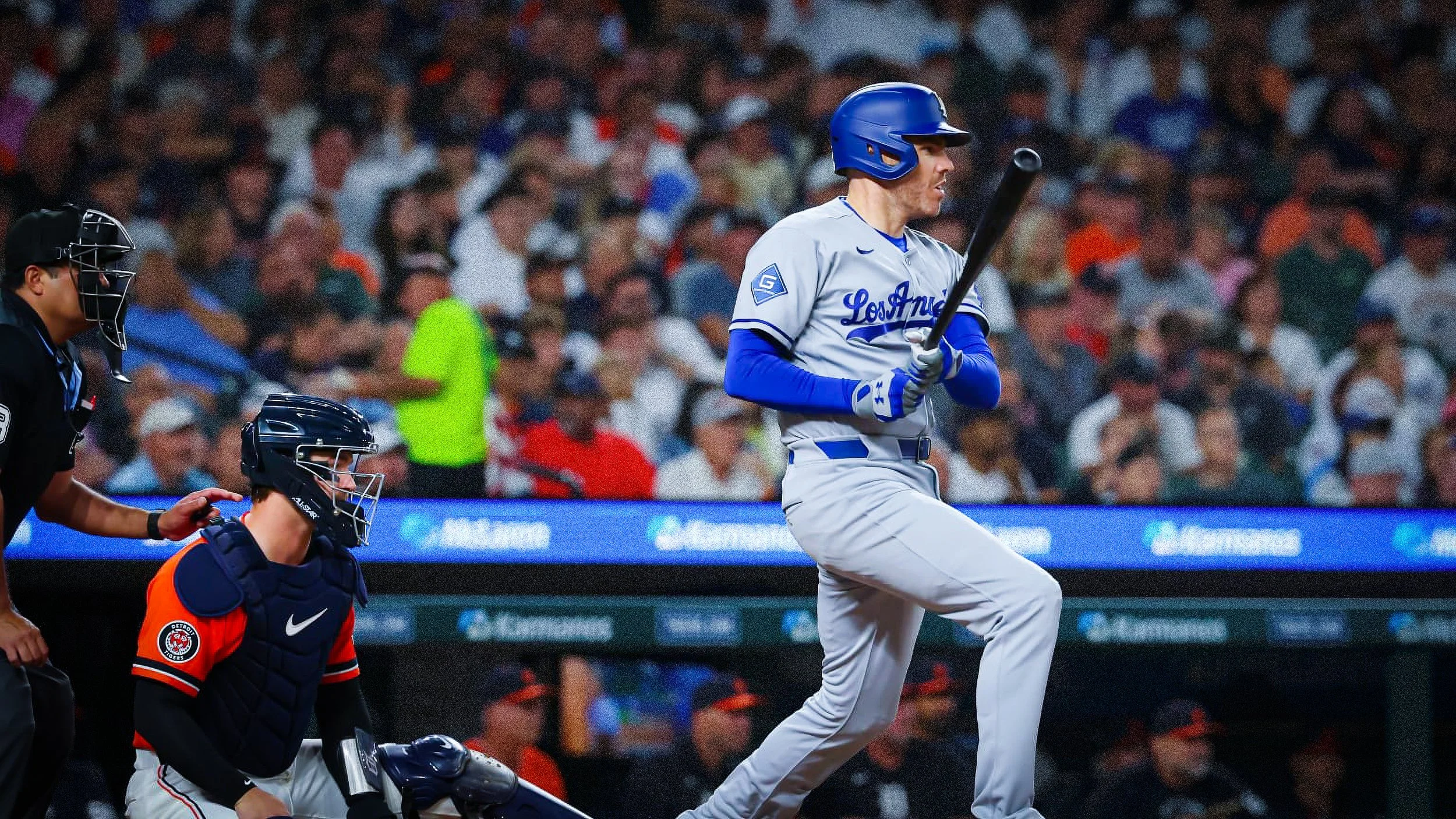
The Los Angeles Dodgers finally got back in the win column Friday night.
Whether the offense actually turned a corner is a much harder question.
Los Angeles opened its weekend series in Detroit with a 2-1 victory over the Tigers, snapping the three-game losing streak that followed a frustrating sweep in Atlanta. Tarik Skubal delivered six strong innings in an emotional return to Comerica Park, Miguel Rojas supplied the game-tying hit and Freddie Freeman drove in the eventual winning run in the eighth.
Those are the encouraging parts.
Then there is this number:
15 runners left on base.
The Dodgers finished with nine hits and drew nine walks, producing traffic throughout the night but scoring only twice. MLB’s official game data confirms Los Angeles stranded 15 while going without an extra-base hit or home run.
So, was Friday a step forward because the Dodgers found a way to win a close game?
Or did it simply hide some of the same offensive problems that followed them out of Atlanta?
The answer may be a little of both.
Dodgers Had Chances Long Before They Finally Scored
The Dodgers did not struggle to put runners on base.
They struggled to bring them home.
Detroit pitching issued nine walks, and Los Angeles collected nine hits, meaning the Dodgers generated more than enough opportunities to build a comfortable lead. Instead, the Tigers repeatedly escaped trouble.
One of the clearest examples came in the fifth inning.
The Dodgers loaded the bases but failed to score when Max Muncy struck out to end the threat. MLB highlighted the escape as one of the game’s pivotal moments.
It was not the only time Los Angeles created a promising situation without turning it into enough runs.
The Dodgers reached base at a .442 clip as a team Friday, yet their nine hits were all singles. They also struck out nine times.
That combination created a strange offensive night.
The at-bats were productive enough to consistently put pressure on Detroit.
The execution with runners aboard was not nearly as productive.
Recent games have made that distinction increasingly important.
Los Angeles does not necessarily need more baserunners.
It needs to make the existing ones count.
Detroit Strikes First Against Skubal
The missed chances became more frustrating when Detroit scored first.
Skubal had been excellent through the early innings of his return to Comerica Park, retiring 12 straight hitters after allowing a leadoff double in the first.
The Tigers finally broke through in the fifth.
Eduardo Valencia doubled and later scored when Max Clark tripled, giving Detroit a 1-0 lead. It was the only run Skubal allowed all night.
For the Dodgers, suddenly trailing despite all of their earlier opportunities created a familiar feeling.
Los Angeles had spent much of the Atlanta series playing from behind while struggling to convert chances.
Friday appeared to be following the same script.
Then the bottom of the batting order helped change it.
Miguel Rojas Delivers the Equalizer
The Dodgers answered in the sixth, although even that rally included another missed opportunity.
Kyle Tucker was thrown out at home plate on a play that could have tied the game.
Los Angeles kept the inning alive, however, and Miguel Rojas came through with a pinch-hit RBI single, bringing Enrique Hernández home to make it 1-1.
Rojas’ contribution was exactly the type of situational hit the Dodgers had been searching for.
It did not require a home run.
It did not require one of the lineup’s biggest names.
It simply required someone to put a ball in play at the right moment and bring a runner home.
That may sound basic, but lately it has not always been easy for Los Angeles.
The Dodgers entered Detroit after being swept in three one-run games in Atlanta. Those losses repeatedly featured opportunities that could have changed the final outcome.
Rojas helped make sure another close game did not slip away the same way.
Freddie Freeman Finally Gives Dodgers the Lead
The score remained tied until the eighth.
Teoscar Hernández reached base and eventually gave Freeman a chance to produce the most important hit of the night.
Freeman lined a 103.2 mph single to center field, scoring Hernández and putting the Dodgers ahead 2-1.
That was all Los Angeles needed.
Freeman finished 2-for-4 with a walk and the game-winning RBI.
Considering how difficult run production had been throughout the night, his eighth-inning single felt considerably bigger than an ordinary RBI.
The Dodgers did not need a crooked number.
They needed someone to finally finish an opportunity.
Freeman did.
Skubal Handles Emotional Return to Detroit
While the offense continued searching for answers, Skubal gave the Dodgers almost no margin for error.
Making his first start at Comerica Park since being traded from Detroit to Los Angeles, the two-time American League Cy Young winner worked six innings, allowing one run on four hits with seven strikeouts and no walks.
His former organization honored him with a pregame tribute, and Skubal admitted afterward that the moment brought tears.
Once the game began, though, he settled into the same ballpark where he developed into one of baseball’s elite pitchers.
After Gleyber Torres doubled to open the first, Skubal retired the next 12 Tigers he faced. Five of his seven strikeouts came on changeups.
Manager Dave Roberts removed him after six innings and 83 pitches, partly because of the emotional nature of the night and because Skubal had exceeded 100 pitches in each of his previous two starts.
The Dodgers needed every bit of that performance.
If Skubal had allowed three or four runs, the offense may not have been able to overcome it.
Bullpen Protects a One-Run Lead
The Dodgers bullpen also deserves credit for making the narrow offensive output stand up.
Evan Phillips worked a dominant inning, striking out the side, and earned the victory. Tanner Scott recorded his 20th save by closing out the ninth.
That finish was notable after the Dodgers’ bullpen experienced several painful late-game moments during the Atlanta series.
On Friday, the pitching staff did not give Detroit an opening.
Skubal provided six innings of one-run baseball.
The relievers handled the rest.
That formula works.
It just places an enormous amount of pressure on the pitching staff when the offense scores twice despite reaching base 18 times.
Fifteen Left on Base Cannot Be Ignored
The Dodgers should feel good about winning.
They should not feel satisfied with the offensive performance.
Leaving 15 runners on base is difficult to overlook, especially after recent concerns about situational hitting against better competition. Reuters and MLB’s official scoring both confirm the unusually high total.
Los Angeles had nine hits.
It drew nine walks.
Multiple bases-loaded situations developed.
Yet only Rojas and Freeman managed to drive home runs.
That does not mean every runner left aboard represents a failure. Baseball does not work that way, and creating that many baserunners is itself encouraging.
There were better at-bats.
The Dodgers forced Detroit’s pitchers to work.
They generated chances throughout the lineup.
Those are positive developments after the offense looked lifeless at times in Atlanta.
The problem is what happened after those runners reached base.
Against weaker opposition in August, a team might survive wasting 13 of 15 opportunities.
Against an elite postseason pitching staff, there may not be 15 runners to strand.
That is where the concern remains.
Encouraging Win or Another Warning Sign?
There are two legitimate ways to view Friday.
The optimistic version:
The Dodgers were coming off an ugly sweep and immediately responded with a gritty road victory. They did not panic after falling behind. Rojas produced a clutch hit off the bench. Freeman delivered late. The pitching staff protected a one-run lead.
That is exactly the type of close game a championship contender should be able to win.
Then there is the less comfortable version:
The Dodgers received nine walks and nine hits and somehow scored only two runs.
They loaded the bases and repeatedly failed to create separation.
They needed near-perfect pitching from Skubal and the bullpen to escape with a one-run victory.
Both versions are true.
And that is probably the fairest way to evaluate where the Dodgers are offensively right now.
Friday was better.
It was not convincing.
Dodgers Finally Stop the Slide
The most immediate objective was ending the losing streak.
Mission accomplished.
Los Angeles improved to 81-54 and avoided carrying the frustration from Atlanta into another series.
That matters.
A three-game losing streak can become four or five quickly if a team begins pressing, particularly after an emotional series like the Dodgers endured against the Braves.
Instead, Los Angeles found a way to win a game that easily could have become another frustrating loss.
But the larger offensive conversation is not going away because Freeman singled in the eighth.
The Dodgers still need cleaner situational hitting.
They need to capitalize when the bases are loaded.
And they cannot expect their starting pitchers to consistently win games where the offense produces only two runs.
Friday provided something Los Angeles badly needed:
a win.
Whether it provided evidence that the Dodgers’ offensive problems are beginning to disappear is another question entirely.
For now, perhaps that is the discussion Dodgers fans should be having.
Was Friday’s comeback an encouraging sign that this team can grind out close games—or does stranding 15 runners make the 2-1 victory feel more like survival than progress?