
The Dodgers asked Yoshinobu Yamamoto to beat one of baseball’s best pitchers in a hostile environment Tuesday night.
He did exactly that.
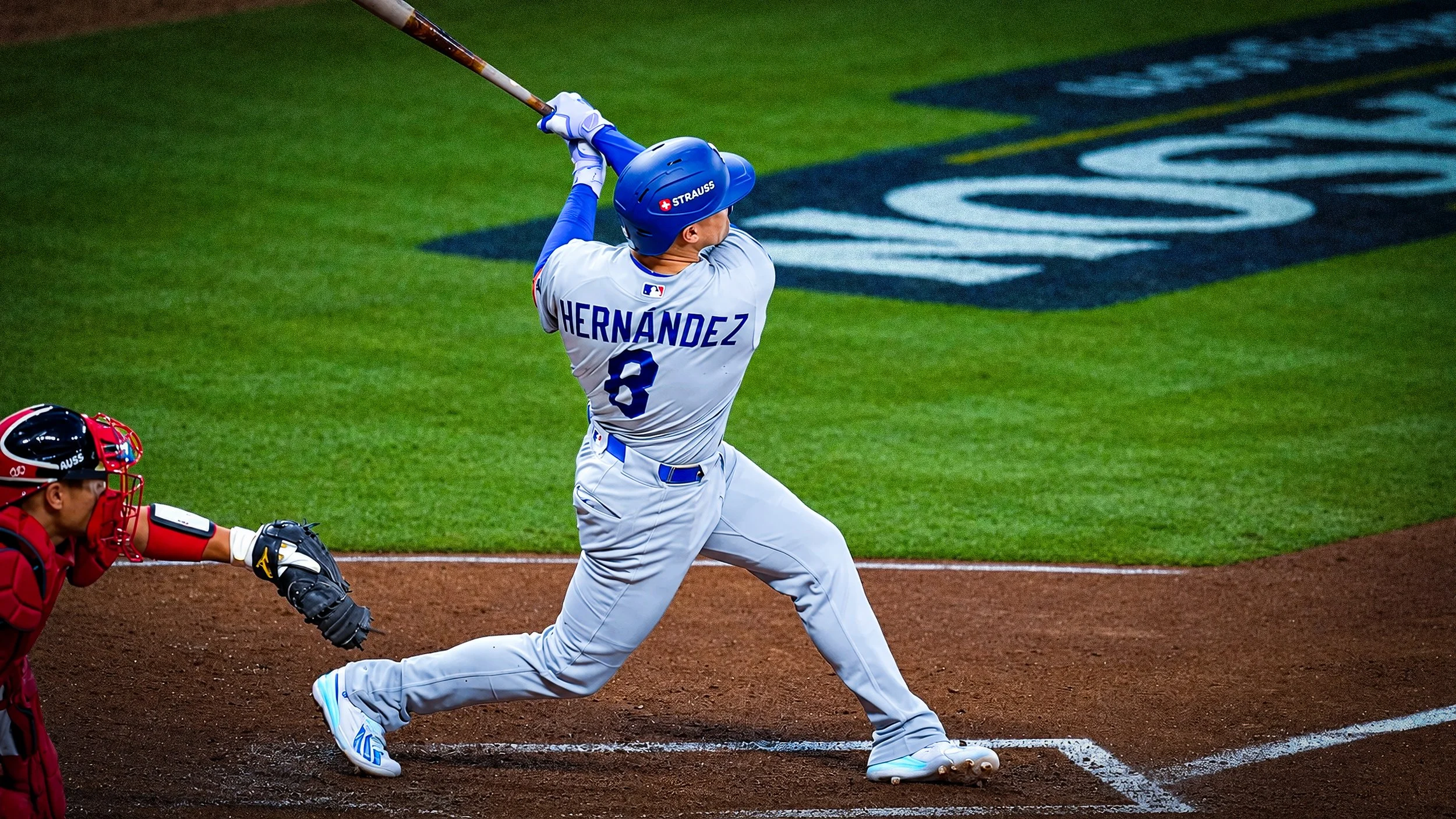
Yamamoto delivered seven dominant innings, Kiké Hernández launched a two-run home run and Freddie Freeman added a solo shot as the Dodgers defeated the Atlanta Braves 3-1 in NLDS Game 3 at Truist Park.
The victory gives Los Angeles a 2-1 series lead and an opportunity to advance to its third consecutive National League Championship Series with one more win Wednesday.
Chris Sale made the Dodgers work for everything, but Yamamoto was unquestionably the best pitcher on the field.
Yamamoto Wins The Battle Of Aces
Yamamoto allowed one run on four hits across seven innings, striking out a postseason career-high 10 while issuing only one walk.
He threw 98 pitches, including 62 strikes, and retired Atlanta in order during the sixth and seventh innings after escaping his only serious trouble of the night.
The performance improved Yamamoto to 8-1 with a 2.14 ERA through his first 11 career postseason appearances.
That record reflects more than pitching for talented Dodgers teams. Yamamoto has repeatedly delivered when Los Angeles has needed him most.
Game 3 provided another example.
The series was tied. Atlanta had reclaimed home-field advantage. Sale was fully rested after throwing a complete-game shutout against the Dodgers in August.
None of it appeared to affect Yamamoto.
He controlled every pitch, changed speeds effectively and prevented Atlanta’s hitters from building sustained pressure. Even when the Braves finally created an opportunity in the fifth inning, Yamamoto never allowed the situation to control him.
The Dodgers entered Game 3 with two elite pitchers receiving most of the attention.
Yamamoto left it as the unquestioned star.
Dodgers Make Sale Work From The Beginning
The Dodgers did not immediately score against Sale, but their early plate appearances served an important purpose.
They forced him to work.
Mookie Betts opened the game with an infield single, and Teoscar Hernández reached on an error. Sale responded by striking out Freeman, Will Smith and Shohei Ohtani, but he required 24 pitches to finish the inning.
Kyle Tucker singled and stole second in the second inning, but the Dodgers stranded him.
They created an even better opportunity in the third.
Betts singled before Freeman drove a ball toward the left-field wall. Mauricio Dubón made a leaping catch to take away what could have been a two-run home run.
Smith later singled and Ohtani reached on catcher’s interference, loading the bases. Miguel Rojas flied out to end the inning, leaving Los Angeles without a hit in another important scoring situation.
The missed opportunities were frustrating, but Sale had already thrown 66 pitches through three innings.
The Dodgers did not allow him to repeat the comfortable rhythm he established during his August shutout.
That mattered when the lineup turned over again in the fourth.
Postseason Kiké Delivers Again
Pages opened the fourth inning with a single to left.
After Tucker lined out, Kiké Hernández stepped to the plate for his first start of the 2026 postseason.
He fell behind Sale during their previous encounter in the second inning and struck out. This time, Hernández recognized a changeup moving toward the inside portion of the plate and crushed it 406 feet into the left-field seats.
The two-run home run gave Los Angeles its first lead and became the 17th postseason homer of Hernández’s career.
It was another addition to an October résumé that cannot be explained entirely by regular-season statistics.
Hernández prepares for postseason moments differently. He slows the game down, accepts the responsibility of the at-bat and rarely appears intimidated by the situation.
Dave Roberts said before the game that the Dodgers needed some of Hernández’s familiar October energy.
They received it immediately.
The decision to start him over Max Muncy against Sale was defensible based on the matchup. Hernández made it look brilliant.
Freeman Adds An Emotional Home Run In Atlanta
Betts grounded out after Hernández’s home run, but Freeman ensured the inning was not finished.
Freeman drove a Sale pitch 399 feet to center field for a solo home run, extending the Dodgers’ lead to 3-0.
It was Freeman’s second home run of the series and the 18th postseason homer of his career, moving him into a tie for 10th in MLB history.
The moment carried additional meaning because it came during Freeman’s first postseason game in Atlanta since leaving the organization following the Braves’ 2021 championship.
Freeman spent his first 12 Major League seasons with Atlanta. Some fans welcomed him back. Others booed him throughout the game.
He answered with another October home run.
Freeman has now collected four hits through the first three games of the series after finishing the regular season in a prolonged slump while managing patellar tendinitis in his right knee.
The first-round bye appears to have helped him physically, and he currently looks like the Dodgers’ most comfortable hitter.
Yamamoto Escapes The Fifth-Inning Threat
Atlanta mounted its only meaningful rally in the fifth.
Dubón and Lane Thomas opened the inning with consecutive singles. Yamamoto then retired Austin Riley on a shallow popup before walking pinch-hitter Rowdy Tellez to load the bases.
The Braves had one out, the top of their lineup approaching and an opportunity to completely change the game.
Drake Baldwin brought home Atlanta’s first run with a groundout to Freeman, cutting the lead to 3-1.
Yamamoto then induced Ronald Acuña Jr. to ground out to Rojas, ending the threat.
That was the game’s most important sequence outside the home runs.
Dave Roberts trusted Yamamoto to handle the heart of Atlanta’s order rather than reaching prematurely for the bullpen. Yamamoto rewarded that trust by preventing the inning from becoming anything more than a single run.
He then returned for two more innings and retired all six hitters he faced, striking out three.
The ability to survive the fifth and immediately regain control separated an excellent start from a postseason-defining performance.
Scott And Díaz Finish The Job
Tanner Scott replaced Yamamoto in the eighth and delivered a scoreless inning.
Scott retired Brewer Hicklen and Baldwin before walking Acuña. He then struck out Matt Olson to end the inning, giving Roberts the exact matchup-based performance the Dodgers needed.
Edwin Díaz handled the ninth.
The inning became uncomfortable immediately when Ozzie Albies doubled off the right-center-field wall. Michael Harris II grounded out to second, moving Albies to third with one out.
Díaz did not allow the moment to accelerate.
Dubón flied out to Tucker in shallow enough right field to keep Albies at third. Mike Yastrzemski then grounded out to Betts, ending the game.
It was Díaz’s first postseason save with the Dodgers and another encouraging performance after his uneven rehabilitation assignment raised questions about whether he would even make the NLDS roster.
He has responded by becoming one of Roberts’ most trusted late-inning options.
Roberts’ Lineup Changes Paid Off
Roberts made the boldest lineup adjustments of the Dodgers’ postseason before Game 3.
Ohtani moved to fifth, Freeman moved into the second spot, Rojas and Kiké Hernández entered against Sale and Pages remained in center despite beginning the series 0-for-7.
The changes produced mixed individual results, but the overall strategy worked.
Hernández delivered the decisive home run.
Freeman homered from the second spot.
Pages rewarded Roberts’ confidence by going 2-for-4 and scoring the game’s first run.
Tucker recorded a hit and stole a base from the eighth position.
Ohtani went 0-for-2 with a walk and reached once through catcher’s interference. Moving him lower did not immediately solve his individual struggles, but it prevented the entire lineup from being constructed around waiting for him to rediscover his swing.
Roberts adjusted to the opponent in front of him, and the Dodgers produced seven hits against Sale—the most he has allowed in a postseason game since 2017.
Sale lasted only five innings after pitching all nine during his August shutout.
That was a meaningful offensive accomplishment even if the final score did not fully reflect it.
Situational Hitting Remains A Concern
The Dodgers won, but their most obvious offensive problem did not disappear.
Los Angeles is now 0-for-13 with runners in scoring position through three games and has stranded 22 runners.
All 10 Dodgers runs in the series have come on seven home runs.
Freeman correctly noted that nobody should care how postseason runs are scored as long as the Dodgers win. Elite pitching makes it difficult to string together multiple hits, and a two-run homer is still one of baseball’s most effective forms of offense.
But the Dodgers cannot assume the home runs will continue arriving exactly when they need them.
They left two runners aboard in the first, stranded Tucker at second in the second and failed to score after loading the bases in the third.
The home runs covered those missed opportunities Tuesday because Yamamoto allowed only one run.
That formula becomes far more dangerous on a night when the pitching staff allows four or five.
The Dodgers do not need to abandon the power that has given them a series lead. They need to supplement it with one timely single, productive out or disciplined at-bat when a runner reaches scoring position.
Rojas Exits With Lower-Back Tightness
The victory included one potential injury concern.
Rojas left the game during an eighth-inning at-bat after experiencing discomfort near his lower back and left hip. Tommy Edman replaced him during the plate appearance.
Rojas later indicated that he was not overly concerned about his availability moving forward.
That is encouraging, but the Dodgers had not formally announced his Game 4 status immediately after the game.
Rojas has become an important defensive and matchup option, particularly against left-handed pitching. His availability will be worth monitoring before Wednesday’s lineup is announced.
Dodgers Have A Chance To Finish The Series
The Dodgers are now one victory away from returning to the NLCS.
Tyler Glasnow is scheduled to start Game 4 against Atlanta right-hander Tyler Mahle. First pitch is set for 3:00 p.m. PDT at Truist Park.
Mahle allowed one run across seven innings during his Wild Card Series start against Philadelphia and finished the regular season with a 1.99 ERA in nine appearances after joining Atlanta.
The Braves are not finished, and Game 4 should not be treated like a celebration waiting to happen.
But the Dodgers accomplished exactly what they needed Tuesday.
They forced Sale to work.
They received a signature October swing from Hernández.
Freeman continued looking like himself again.
And Yamamoto reminded everyone why the Dodgers trust him when the pressure becomes greatest.
The lineup still has issues to solve, especially with runners in scoring position. Ohtani still has not rediscovered his power. The Dodgers are still depending too heavily on home runs.
Those concerns matter.
They matter considerably less when Yamamoto pitches like the best player on the field.
Who had the biggest impact in Game 3: Yamamoto, Kiké or Freeman?