
Shohei Ohtani Reportedly Talked Dodgers Out Of Sitting Him For NLCS Game 4
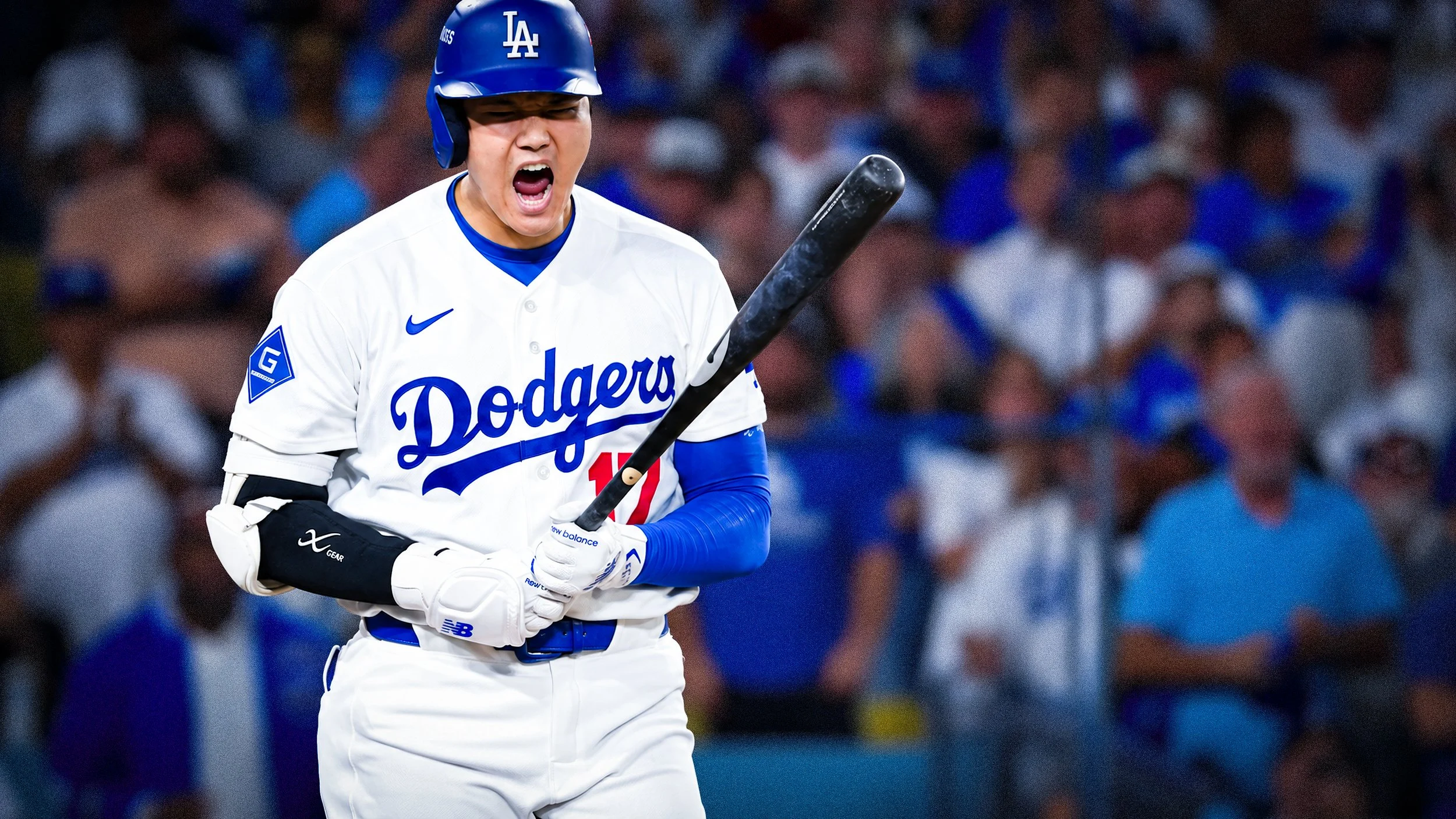
Shohei Ohtani’s emotional home run in Game 4 of the National League Championship Series may have carried considerably more meaning than anyone realized at the time.
According to Jim Bowden, the Dodgers planned to sit Ohtani for their elimination game against the Milwaukee Brewers after Andrew Friedman evaluated him before the game.
Bowden revealed during an appearance on Foul Territory that Friedman, Brandon Gomes, Dave Roberts, Ohtani’s agent and Ohtani met to discuss removing him from the lineup.
Ohtani reportedly convinced them to let him play.
“They wanted to sit him,” Bowden said. “And Ohtani convinced them not to.”
The Dodgers have not publicly confirmed Bowden’s account. Until they do, the meeting and the plan to sit Ohtani should be treated as a report attributed to Bowden—not an independently established fact.
Ohtani Had Already Argued To Remain In Game 3
Ohtani’s place in the lineup had become a public question before Game 3.
Katie Woo and Ken Rosenthal reported that the Dodgers were considering giving him consecutive days to rest, with Josue De Paula viewed as the leading candidate to replace him at designated hitter.
Dave said Ohtani “doesn’t feel great” and planned to meet with him before the game. After that conversation, Ohtani was adamant that he remained healthy enough to contribute and believed he was close to correcting a mechanical problem with his swing.
He remained in the lineup but was moved to sixth—the lowest he had batted since joining the Dodgers.
Ohtani responded by reaching base three times, finishing 1-for-2 with a single, a walk and a hit-by-pitch in Los Angeles’ 6-2 loss.
That performance appeared to quiet the public discussion about sitting him.
Bowden’s account suggests the conversation returned before Game 4.
Dodgers Reportedly Wanted Ohtani Out Of Game 4 Lineup
Bowden did not provide every detail of the reported meeting, including exactly when it occurred or what Friedman observed that persuaded the Dodgers to recommend sitting Ohtani.
He did indicate that the concern extended beyond the box score.
Bowden said he personally would have sat Ohtani based on what he saw during games, batting practice and the Dodgers’ workout. He believed Ohtani was not properly using his lower half—an observation consistent with the knee problems that had limited him during the second half.
That assessment was Bowden’s opinion.
The reported decision-making process involving the Dodgers and Ohtani is the news.
Ohtani had entered Game 4 batting .174 during the postseason with three singles, no extra-base hits and no RBIs. He was also attempting to play through problems involving his left knee and right biceps.
Despite those concerns, Ohtani reportedly made his case directly to the people deciding the lineup.
He not only remained in the game. The Dodgers moved him back into the leadoff spot.
Ohtani Responded With An Emotional Home Run
The decision immediately appeared to pay off.
With two runners aboard in the second inning, Ohtani drove a Dustin May pitch 428 feet into the right-field pavilion for a three-run home run.
It ended the longest homerless streak of Ohtani’s career and produced his first extra-base hit and first RBIs of the postseason.
His reaction was unusually expressive.
Ohtani flipped his bat, looked toward the Dodgers’ dugout and pointed as he began rounding the bases. The home run gave Los Angeles an early 4-0 lead and briefly made an improbable comeback from a three-games-to-none deficit feel possible.
Bowden believes the reaction was connected to the pregame discussion.
“That’s why you saw that extra emotional reaction when he homered,” Bowden said.
That connection is Bowden’s interpretation. Ohtani has not publicly said his celebration was directed at anyone involved in the reported meeting.
However, if Bowden’s account is accurate, the emotion is easy to understand.
Ohtani had reportedly argued for the opportunity to play, then delivered the swing the Dodgers desperately needed.
Bowden Would Have Started Josue De Paula In Game 3
Bowden also offered his own opinion about how the Dodgers should have handled the situation one night earlier.
He said he would have started De Paula at designated hitter in Game 3 because he believed the rookie had a better chance of driving the ball than the compromised version of Ohtani.
That was not presented as the Dodgers’ plan for Game 4.
De Paula had previously been identified as the likely replacement when the Dodgers discussed resting Ohtani before Game 3. Bowden’s comments reinforce how seriously Los Angeles had considered that possibility, but they do not establish that De Paula was chosen to start Game 4 if Ohtani sat.
Ohtani’s ability to reach base three times in Game 3 and homer in Game 4 also shows why the decision was so difficult.
He was clearly compromised.
He was still capable of changing a game with one swing.
The Home Run Could Not Save The Dodgers’ Season
Ohtani’s three-run shot gave the Dodgers a four-run advantage, but Los Angeles could not protect it.
Milwaukee erased the deficit and won 6-4, completing a four-game sweep and ending the Dodgers’ attempt to capture a third consecutive World Series championship.
Ohtani struck out in his other three plate appearances, illustrating the conflicting reality of his postseason.
He was not consistently producing like himself, yet he remained capable of delivering the biggest swing of the game.
The loss prevented his home run from becoming the beginning of a historic comeback. Bowden’s revelation nevertheless adds a remarkable layer to the final home run of the Dodgers’ season.
Ohtani was reportedly close to watching Game 4 from the bench.
Instead, he convinced the Dodgers to give him another opportunity and responded with one of his most emotional moments in Los Angeles.
The home run did not save the Dodgers’ season, but it may have explained why Ohtani fought so hard to remain in the lineup.