
Josue De Paula’s Option Keeps Door Open For NLDS Return
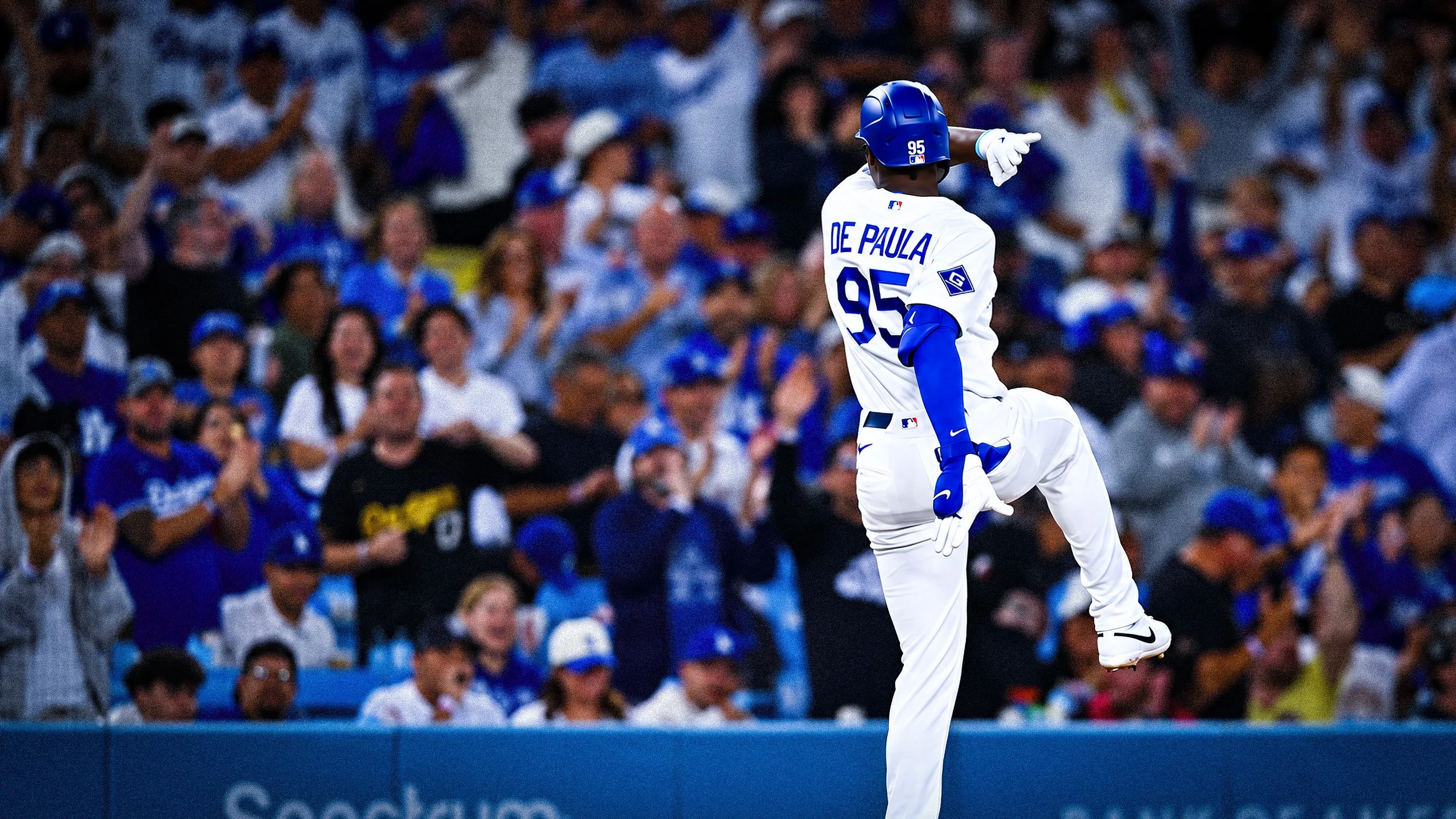
Josue De Paula’s first Major League stint has ended, but his opportunity to contribute in October remains very much alive.
The Dodgers optioned De Paula to Triple-A Oklahoma City on September 23 as the corresponding move for Shohei Ohtani’s return from the injured list.
That decision should not be viewed as a performance-based demotion.
De Paula impressed throughout his 11 games with the Dodgers, but Ohtani’s return removed the everyday designated-hitter opportunities that made De Paula’s promotion possible. With Teoscar Hernández and Kyle Tucker occupying the corner-outfield spots, there was no clear path to regular playing time.
Instead of leaving De Paula on the bench, the Dodgers sent him to Oklahoma City so he could continue receiving at-bats while they evaluate their remaining postseason roster options.
More importantly, the timing of the transaction keeps the door open for De Paula to return when the National League Division Series begins.
De Paula Can Return For NLDS Game 1
An optioned player ordinarily must remain in the minor leagues for at least 10 days before being recalled unless he is replacing an injured player.
Because De Paula was optioned September 23, he becomes eligible to return October 3—the scheduled date of NLDS Game 1.
If the Dodgers secure a first-round bye, De Paula could potentially return in time for the beginning of their postseason schedule. If Los Angeles has to play in the Wild Card Series, he would not be eligible during that round but could be reconsidered if the team advances.
His postseason eligibility is not completely automatic.
De Paula was not on the Dodgers’ 40-man roster by the September 1 eligibility deadline. Los Angeles would therefore need approval from the Commissioner’s Office to add him as an injury replacement.
De Paula was already in the organization before August 31, and the Dodgers have multiple injured players who could provide the necessary roster pathway. MLB’s reporting indicates the club should be able to carry him if it decides his bat belongs on the postseason roster.
The procedural path exists. The Dodgers still have to decide whether to use it.
Ohtani’s Return Changed The Playing-Time Equation
De Paula originally joined the Dodgers when Ohtani went on the injured list with right-biceps inflammation.
That created an unusual opening for one of baseball’s best prospects to receive consistent at-bats without immediately being asked to handle a significant defensive role.
De Paula took advantage of the opportunity.
The 21-year-old batted .323 with a .500 on-base percentage and .581 slugging percentage across 42 plate appearances. He collected three doubles, one triple and one home run while driving in seven runs and scoring seven times.
His plate discipline may have been even more impressive than the extra-base production.
De Paula drew 11 walks while striking out only five times, reaching base in exactly half of his Major League plate appearances.
“He’s just a special hitter,” Dave Roberts said. “Hitters don’t see the ball that quickly out of hand; it’s a gift.”
Roberts also pointed to De Paula’s ability to avoid chasing pitches and remain comfortable in big moments—traits that could translate well to a postseason pinch-hitting role.
Ohtani is expected to serve as the Dodgers’ designated hitter throughout the remainder of the regular season and into October. That means De Paula would no longer have the everyday role he filled during his initial stint.
The question is whether his advanced approach makes him valuable enough to carry as a left-handed bat off the bench.
Dodgers Still Want To Evaluate Dalton Rushing
De Paula’s option also allows the Dodgers to evaluate Dalton Rushing before finalizing their postseason bench.
Rushing has been sidelined with right-elbow discomfort and is expected to return in a hitter-only role. His partial UCL tear limits his defensive availability, meaning the Dodgers are primarily assessing what he could contribute as a left-handed pinch-hitter.
Roberts acknowledged that Rushing faces a difficult assignment after missing more than two weeks.
“To be quite frank, it’s going to be tougher for Dalton given the time he’s missed,” Roberts said. “To think that you have three games to get back into playoff form, it’s tough to do.”
The Dodgers will consider the quality of each player’s at-bats, strike-zone decisions and potential impact against postseason pitching.
Rushing has more Major League experience, but De Paula has the advantage of recent playing time and consistently competitive plate appearances.
De Paula Earned His Place In The Conversation
The Dodgers are not promising De Paula an NLDS roster spot.
They are preserving their ability to choose him.
Andrew Friedman said De Paula did everything he could during his first Major League opportunity to put himself in the postseason discussion. Roberts was equally clear about the rookie’s standing.
“He’s a part of the conversation, and he’s earned that,” Roberts said.
That is the proper way to view the move.
De Paula was not optioned because the Dodgers were disappointed in his performance. Ohtani reclaimed the DH position, the regular outfield spots were already occupied and the club still wanted to evaluate Rushing.
Sending De Paula to Oklahoma City gives him an opportunity to keep playing while satisfying the minimum option period before NLDS Game 1.
The Dodgers still have a decision to make, but De Paula’s first 42 plate appearances ensured that decision will not be an easy one.