
Dodgers-Braves NLDS Tied After Split At Dodger Stadium
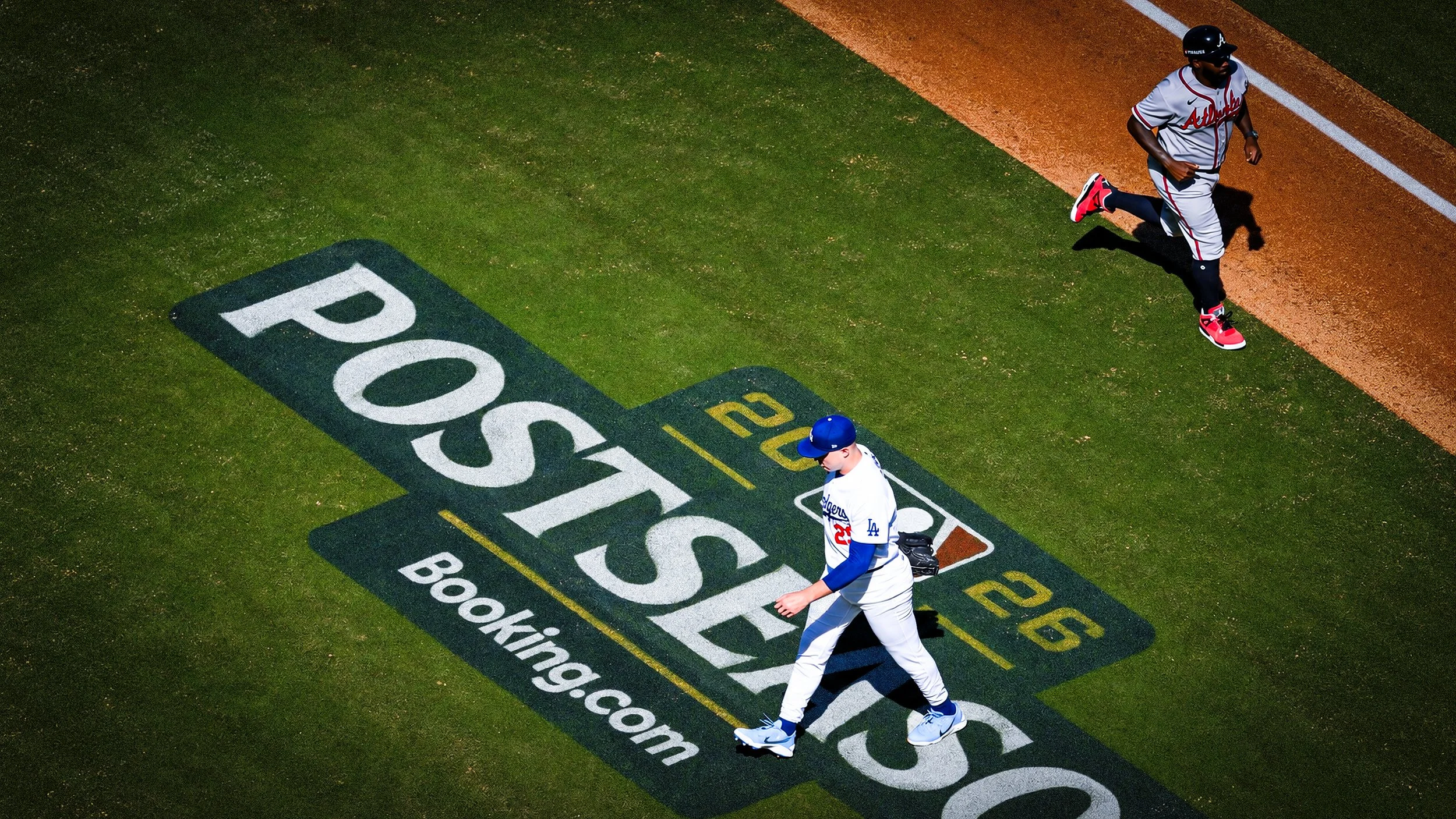
The Dodgers opened the National League Division Series with the dominant starting pitching and home-run power they hoped would carry them deep into October.
One night later, Atlanta exposed the other side of the equation.
The Dodgers defeated the Braves 5–3 in Game 1 before dropping Game 2 by a 3–2 score, sending the best-of-five series to Atlanta tied at one game apiece.
Los Angeles has hit five home runs through the first two games. The problem is that every one of its seven runs has come by way of the long ball.
That lack of production with runners on base proved costly Sunday and has become the clearest concern entering a pivotal Game 3.
Tarik Skubal And Three Home Runs Deliver Game 1
Tarik Skubal gave the Dodgers exactly what they needed in Saturday’s series opener.
Making his first postseason start for Los Angeles, Skubal allowed one run on two hits across six innings. He walked two, struck out seven and retired 15 consecutive hitters during one stretch.
The performance was even more impressive under the conditions. The temperature was approximately 100 degrees when the game began at Dodger Stadium.
Atlanta used Dylan Dodd as an opener, and the Dodgers remained scoreless through the first three innings. The game changed once the Braves entered the more vulnerable portion of their bullpen.
Teoscar Hernández broke the scoreless tie with a two-run homer in the fourth inning. Sean Murphy answered with a solo shot off Skubal in the sixth, briefly trimming the Dodgers’ advantage to one.
Los Angeles responded immediately.
Kyle Tucker launched a two-run homer in the bottom half of the sixth before Max Muncy added a solo shot two batters later, extending the lead to 5–1.
For Tucker, the home run represented the kind of October moment the Dodgers were hoping could redefine his difficult first regular season in Los Angeles.
Muncy’s homer was the 17th of his postseason career, moving him into sole possession of the Dodgers’ franchise record.
The final inning became more uncomfortable than expected. Ozzie Albies hit a two-run homer against Tanner Scott, and Evan Phillips entered with two outs before eventually securing the 5–3 victory.
It was not a clean finish, but the Dodgers left Game 1 with the result they needed.
Dodgers Fail To Capitalize In Game 2
The Dodgers appeared to have a significant pitching advantage entering Sunday.
Blake Snell was starting for Los Angeles, while Atlanta was forced to piece together another bullpen game after saving Chris Sale for later in the series.
That advantage never materialized.
Snell struggled with his command from the beginning, walking five batters and throwing only 47 of his 90 pitches for strikes. He limited Atlanta to one run, but lasted only 3⅔ innings and forced the Dodgers to ask six relievers to cover the remainder of the game.
Roberts said afterward that Snell’s struggles were related to his delivery and command rather than the groin issue that interrupted his final weeks of the regular season.
Atlanta took a 1–0 lead during a difficult first inning for Snell. Two walks helped load the bases before Mauricio Dubón drove in the game’s first run with an infield single.
Freddie Freeman tied the game with a leadoff homer in the fourth inning, recording his first extra-base hit since September 2.
The Dodgers could not keep the game tied for long.
Michael Harris II tripled with two outs in the fifth after Teoscar Hernández misread his fly ball in left field. Harris then scored on a wild pitch from Kris Bubic, restoring Atlanta’s lead.
Harris struck again in the seventh, driving in Matt Olson with a double off Edgardo Henriquez to make it 3–1.
Missed Opportunities Define The Loss
The Dodgers had chances to change Game 2 but repeatedly failed to deliver the hit they needed.
Los Angeles finished 0-for-8 with runners in scoring position and stranded seven runners. Ray Kerr and Didier Fuentes helped Atlanta navigate its bullpen game, with Fuentes retiring 11 consecutive hitters before Muncy finally broke through.
Muncy hit a two-out solo homer in the ninth, cutting the deficit to one and giving the Dodgers one final opportunity.
Raisel Iglesias ended the threat by getting Josue De Paula to pop out, completing Atlanta’s 3–2 victory.
Freeman said afterward that the Dodgers must find a way to score without depending exclusively on home runs.
Through two games, that is the defining offensive issue.
Hernández, Tucker, Freeman and Muncy have all provided power, but Los Angeles has not manufactured a single run through consecutive hits, productive outs or situational execution.
Atlanta made the Dodgers pay for its mistakes in Game 2. The Dodgers did not do the same when their opportunities arrived.
Roki Sasaki Provides An Encouraging Sign
One positive development emerged from an otherwise frustrating Game 2.
Roki Sasaki pitched two scoreless innings without allowing a hit. He issued two walks and needed 36 pitches, but escaped a bases-loaded situation in the eighth by inducing Ronald Acuña Jr. into an inning-ending double play.
Sasaki’s command was not perfect, but his ability to keep Atlanta off the board provided another look at how Roberts could use him during the postseason.
The off day gives most of the Dodgers’ bullpen an opportunity to recover before Game 3, although Sasaki’s two-inning workload could affect his availability Tuesday.
Yoshinobu Yamamoto Faces Chris Sale In Game 3
The series now shifts to Truist Park for Game 3 on Tuesday at 3 p.m. PDT and 4 p.m. MDT.
Yoshinobu Yamamoto will make his 2026 postseason debut for the Dodgers against Sale.
It is a rematch of their August 27 duel in Atlanta, when Sale threw a complete-game shutout and the Braves defeated the Dodgers 1–0 despite Yamamoto allowing only one run across 6⅓ innings.
Sale finished the regular season with a 2.16 ERA and held the Dodgers to five hits in that August shutout. Atlanta pushed him to Game 3 after he recorded the final four outs of its Wild Card Series victory over Philadelphia.
Yamamoto enters with the opportunity to reclaim home-field advantage for the Dodgers.
The winner of Game 3 in a best-of-five postseason series tied 1–1 has advanced 48 of 67 times. That history does not decide what will happen Tuesday, but it illustrates how dramatically the next game can alter the series.
Dodgers Must Find More Than Home-Run Power
The Dodgers have received strong performances from Skubal, Muncy, Tucker and Hernández. Freeman also appears to be finding his postseason swing after dealing with knee soreness and a prolonged late-season slump.
But the first two games have revealed how small the Dodgers’ margin can become when the offense does not convert its opportunities.
Game 1 showed the formula at its best: dominant starting pitching, multiple home runs and enough bullpen execution to protect the lead.
Game 2 showed what happens when the starter cannot work deep, defensive and pitching mistakes create runs, and the lineup fails with runners in scoring position.
The series is now effectively a best-of-three, with Games 3 and 4 in Atlanta before a potential deciding Game 5 returns to Dodger Stadium.
The Dodgers’ pursuit of a third consecutive championship remains very much alive.
They will simply have to earn it without the series advantage they expected to carry out of Los Angeles.
What concerns you more after the first two games: the lack of situational hitting or the uncertainty behind the Dodgers’ starting rotation?