
The Milwaukee Brewers had an opportunity to make a stronger push for Tarik Skubal before the trade deadline.
They decided the price was too high.
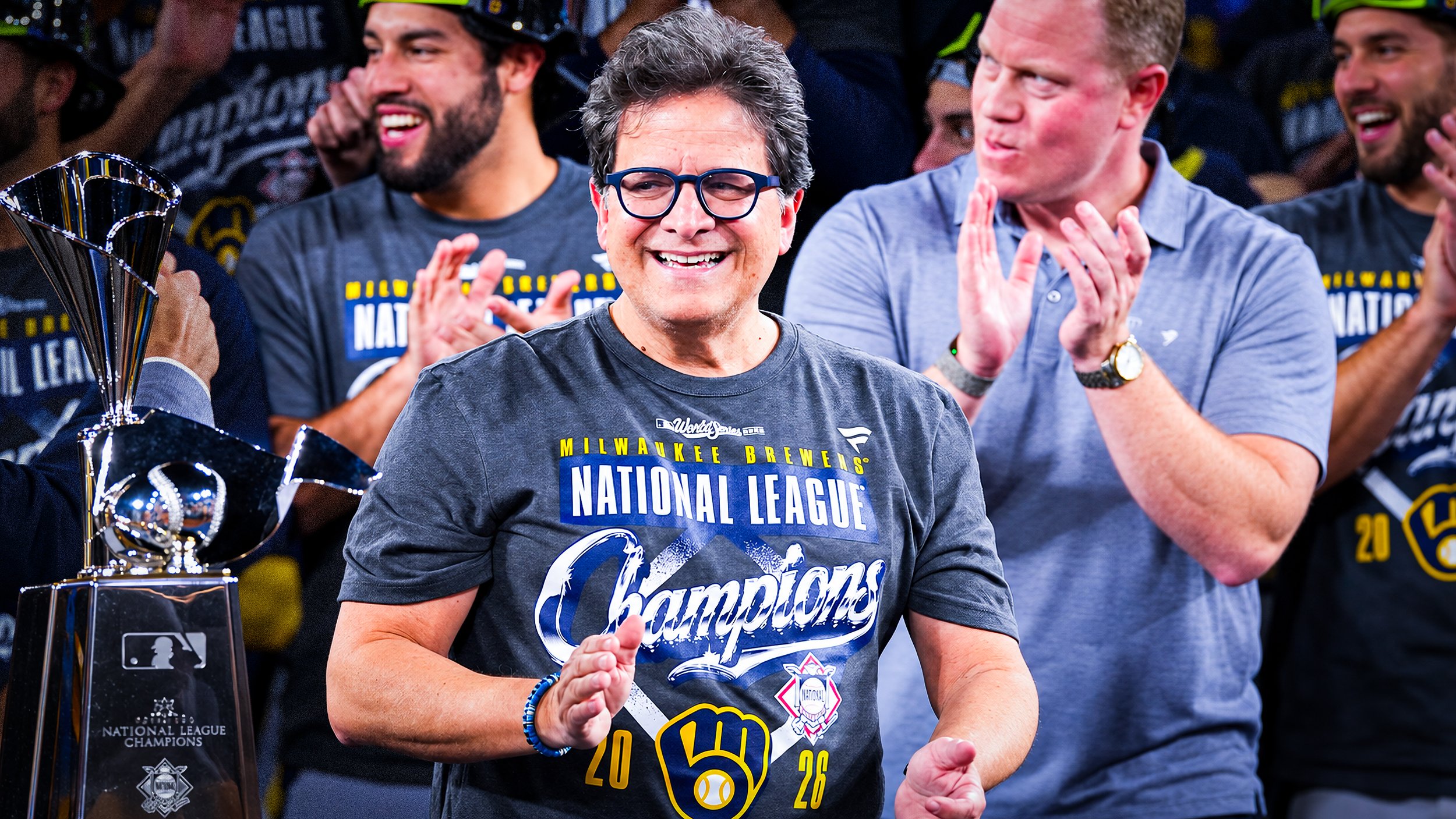
Brewers owner Mark Attanasio discussed that decision during an October 20 interview with Jon Heyman and Joel Sherman, explaining why Milwaukee refused to sacrifice more of its young talent for the two-time Cy Young Award winner.
“This team was built, not bought,” Attanasio said.
That phrase understandably received attention from Dodgers fans, especially after Los Angeles acquired Skubal and entered October with one of baseball’s most expensive rosters.
But the full context was more complicated than an owner simply taking a shot at the Dodgers.
Attanasio was defending Milwaukee’s decision to protect the pipeline that helped produce a 103-win team and carry the Brewers into the World Series.
Milwaukee Made A Serious Offer For Skubal
The Brewers did not simply call Detroit, hear the asking price and walk away.
Milwaukee reportedly built an offer around highly regarded shortstop prospect Luis Peña and two other position players. Previous reporting indicated that all three proposed players were hitters and that at least two ranked among baseball’s Top 100 prospects.
The Brewers nevertheless established several limits.
Jesús Made, Logan Henderson, Cooper Pratt and Luis Lara were reportedly considered unavailable during the negotiations. Attanasio confirmed that Henderson’s name surfaced during the discussions and suggested the pitching portion of Detroit’s desired return became a major obstacle.
Detroit eventually accepted a Dodgers package featuring outfielder Zyhir Hope and right-handed pitchers River Ryan and Brady Smith. Hope and Ryan were both Top 100 prospects at the time of the deal.
Los Angeles was willing to surrender premium young talent for an immediate October difference-maker.
Milwaukee was willing to offer significant prospect value, but not the combination Detroit wanted.
Attanasio Wanted To Protect Milwaukee’s Future
Attanasio said he spoke with Matt Arnold about whether the Brewers could improve their final offer after Detroit presented its last asking price.
Milwaukee ultimately chose not to cross that line.
The reasoning was straightforward: the Brewers wanted Skubal, but they did not want to weaken the young foundation responsible for their success.
That calculation is especially important for a smaller-market organization.
The Dodgers can absorb prospect losses differently because of their financial resources, scouting operation and deep farm system. If Los Angeles trades multiple highly regarded young players, it can still pursue expensive free agents or use other organizational depth to address future needs.
Milwaukee has less room for error.
Young, controllable players are not merely future trade pieces for the Brewers. They are essential to keeping the team competitive without carrying one of baseball’s largest payrolls.
That does not mean Milwaukee should never sacrifice prospects. It means every major trade requires the organization to decide how much of its future it can afford to exchange for one postseason run.
The Brewers Still Feared Facing Skubal Again
Milwaukee’s decision did not make Attanasio comfortable when the Brewers encountered Skubal in the NLCS.
Skubal allowed two runs across five innings in Game 1, but Milwaukee defeated Los Angeles, 2–1. Yoshinobu Yamamoto then started Game 2, when Henderson helped the Brewers take control of the series by outperforming him in a 7–4 victory.
The Brewers eventually completed a four-game sweep.
Attanasio acknowledged that Milwaukee’s inability to close the series quickly could have created a much more difficult path. Had the Dodgers extended the NLCS, the Brewers potentially would have faced Skubal and Yamamoto again before a possible Game 7.
That possibility clearly concerned him.
Milwaukee’s decision to pass on Skubal worked because the Brewers defeated him, beat Yamamoto and never allowed the series to cycle back through Los Angeles’ rotation.
Had the Dodgers forced a Game 6 or Game 7, Milwaukee’s deadline restraint would have been examined much differently.
“Built, Not Bought” Is More Complicated Than It Sounds
Attanasio’s wording will naturally be interpreted as a contrast between Milwaukee and Los Angeles.
The Brewers developed much of their roster internally and reached the World Series with considerably fewer financial resources. That is a legitimate organizational achievement.
But suggesting the Dodgers were simply “bought” would ignore a major part of how Los Angeles constructed its roster.
The Dodgers developed contributors, created trade value through their farm system and surrendered two Top 100 prospects to acquire Skubal. Their ability to make that trade came from player development—not only payroll.
Los Angeles has advantages Milwaukee does not possess. There is no reason to pretend otherwise.
The Dodgers can spend aggressively, retain expensive stars and replace mistakes more easily than most organizations. However, their willingness to exchange Hope, Ryan and Smith for Skubal was still a baseball decision involving real long-term risk.
The difference was not that one organization cared about development while the other did not.
The difference was how much future value each club was willing—and financially equipped—to risk for the present.
Did Milwaukee Make The Right Decision?
Based on the immediate outcome, it is difficult to argue with Milwaukee’s choice.
The Brewers eliminated the team that acquired Skubal, reached the World Series and retained the young players they refused to surrender. Henderson even delivered four strong innings in Game 2, reinforcing why Milwaukee considered him too valuable to include.
That does not mean refusing the trade was automatically the correct process.
October is unpredictable. One bad inning could have changed the series, and Skubal could have been the difference if Milwaukee had been forced into another game against him.
The most aggressive deadline move does not always produce a championship. The most conservative approach does not always preserve a contender.
Every front office must determine when its window is open wide enough to justify paying an uncomfortable price.
The Dodgers believed adding Skubal gave them their best chance to win a third consecutive championship. The Brewers believed their existing roster was capable of winning without sacrificing a larger portion of their future.
Only one reached the World Series.
Milwaukee’s gamble worked this October, but Attanasio’s comments reveal how close the Brewers came to making a completely different decision—and how concerned they remained about facing the ace they allowed Los Angeles to acquire.
Would you rather protect a deep farm system or trade premium prospects when you believe your team can win the World Series?