
Alex Freeland’s Slow Start Reopens Dodgers’ September Roster Debate
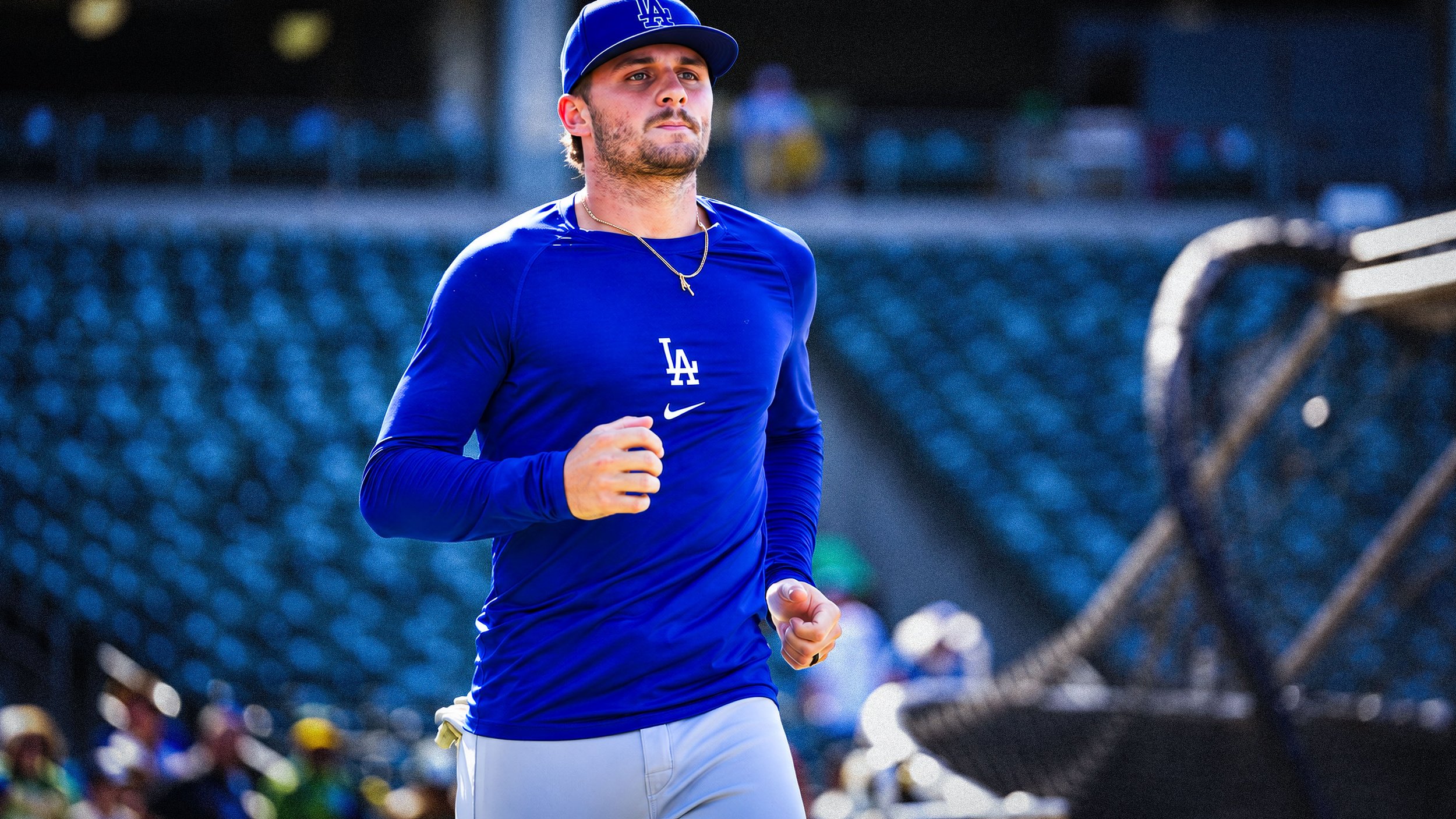
When the Dodgers expanded their roster on Sept. 1, many fans expected the club to add a hitter capable of providing an immediate offensive jolt.
James Tibbs III was destroying Triple-A pitching.
Hyeseong Kim remained available in Oklahoma City.
Instead, Los Angeles recalled Alex Freeland.
One week later, the decision is already generating another debate.
Freeland is 1-for-12 since returning to the Major Leagues, with no extra-base hits or RBIs and a .350 OPS. He struck out in his only at-bat Monday against Cincinnati before Miguel Rojas replaced him as a pinch-hitter later in the game.
Twelve at-bats are nowhere near enough to declare that the move has failed.
But September is different.
The Dodgers are trying to determine which players give them the best chance in October, and two alternatives in Triple-A make the conversation difficult to ignore.
Why the Dodgers Chose Freeland in the First Place
It is important to remember that Freeland was not recalled because the Dodgers viewed him as their best available minor-league hitter.
He was recalled because of roster fit.
Freeland is a switch hitter who can play second base, shortstop and third base. More importantly, using him at second allows Tommy Edman to spend more time in center field.
That was a significant part of the Dodgers’ reasoning when rosters expanded.
Dave Roberts explained that Los Angeles was not bringing up an outfielder because the club wanted to continue giving Teoscar Hernández an opportunity to turn his season around. Freeland instead provided another left-handed option against right-handed pitching while preserving defensive flexibility.
That decision has actually aged fairly well in one respect.
Hernández has responded.
His bat has heated up dramatically over the past week, including the walk-off double against St. Louis and a three-run homer Monday against Cincinnati.
So Freeland should not be judged as though he was promoted to replace Hernández or become an everyday offensive centerpiece.
That was never his assignment.
Still, 1-for-12 Is Not Much Production
The other side is obvious.
The Dodgers did want Freeland to contribute offensively.
So far, he hasn't.
His lone hit since returning came during the Washington series. He has not recorded an extra-base hit or driven in a run.
Freeland also wasn't particularly productive during his earlier Major League stint. He entered September after hitting .231/.309/.313 in the majors this season, while producing a much better .259/.357/.430 line during his time with Oklahoma City.
That creates a legitimate question.
How long should the Dodgers remain patient when there are only a few weeks left to evaluate their postseason roster?
The answer probably isn't "make a move immediately."
But Freeland's leash also shouldn't be unlimited simply because the organization preferred his roster fit on Sept. 1.
James Tibbs III Is Making the Offensive Argument Impossible to Ignore
If this decision were based purely on offense, Tibbs would have the strongest case.
The 23-year-old has been one of the best hitters in the Pacific Coast League.
Through Oklahoma City's most recent game, Tibbs is batting:
.291/.413/.539 with a .952 OPS, 28 home runs and 98 RBIs in 130 games.
He also has 30 doubles and 99 walks.
Those aren't numbers based on one hot week.
Tibbs has produced all season.
The Dodgers acquired him from Boston in the Dustin May trade at the deadline, and he has continued hitting despite moving rapidly through multiple organizations and levels over the past two seasons. He was originally a first-round pick of the Giants in 2024.
At some point, Triple-A production that strong deserves consideration at the next level.
The question is whether right now is the correct moment.
Tibbs Isn't Really a Direct Replacement for Freeland
This is where the debate gets more complicated.
Tibbs and Freeland do not provide the same thing.
Freeland is an infielder.
Tibbs is primarily a corner outfielder and can also play first base.
If the Dodgers send Freeland down and call up Tibbs, they aren't simply replacing an unproductive hitter with a better one.
They would be changing the structure of the bench.
Freeland helps Los Angeles move Edman to center while still covering second base. Tibbs does not provide that same defensive solution.
And unlike Freeland or Kim, Tibbs is not currently on the Dodgers' 40-man roster. The Dodgers would need to select his contract and create a 40-man opening if one is not available.
There is also an October wrinkle.
Because Tibbs was not on the 40-man roster before Sept. 1, simply promoting him now would not automatically make him postseason eligible. MLB rules do allow a player who was already in the organization by Aug. 31 to be added as an injury replacement through a petition to the Commissioner's Office, assuming the requirements are met.
So Tibbs could potentially reach a postseason roster under the right circumstances.
But it isn't as simple as promoting him now and automatically having him available in October.
Hyeseong Kim May Actually Be the More Direct Alternative
If the Dodgers decide Freeland isn't giving them enough, Kim might be the easiest pivot.
He is already on the 40-man roster.
He has Major League experience.
And he can play second base, shortstop and center field — essentially providing many of the same roster-flexibility benefits that made Freeland attractive in the first place.
Kim hasn't overwhelmed offensively this season.
He hit .259/.323/.328 with a .651 OPS in 116 Major League at-bats, and the Dodgers optioned him in May partly so he could work on his swing.
His overall Triple-A line is fairly modest as well:
.270/.337/.355 with a .692 OPS.
But his recent performance deserves attention.
Contrary to the idea that Kim is currently struggling, he has actually begun trending upward.
He went 2-for-4 with a double Sunday, extending his on-base streak to 12 games. During that run, he was 17-for-45 — a .378 average — with three extra-base hits and four RBIs.
His September line through Sunday was .250/.375/.350.
That doesn't suddenly make him an offensive force.
But paired with his speed and ability to defend multiple premium positions, it strengthens his case considerably.
So What Should the Dodgers Do?
For now, staying with Freeland makes sense.
Twelve at-bats are simply too few to overturn a roster decision that was made for reasons beyond offense.
The Dodgers have also won five consecutive games, Hernández has started hitting again and the lineup as a whole is showing signs of improvement. There is no immediate crisis forcing Los Angeles into another move.
But "remain patient" does not need to mean "wait indefinitely."
September is an audition.
If Freeland continues getting starts against right-handed pitching and still isn't producing after another week or so, the Dodgers should be willing to reconsider.
At that point, the decision comes down to what they want.
If they value defense, speed and positional versatility, Kim makes the most sense.
He can fill almost the same role as Freeland without requiring a 40-man transaction, and his recent Triple-A performance is trending in the right direction.
If the Dodgers believe the bench desperately needs another impact bat, Tibbs becomes the more intriguing option.
Nobody in this discussion can match his offensive numbers.
But promoting Tibbs would be a more aggressive move because the Dodgers would be prioritizing offensive upside over defensive fit — while also dealing with the 40-man and postseason-eligibility considerations.
Tibbs Has Earned the Conversation
Perhaps the fairest conclusion is that Freeland hasn't played poorly long enough to lose his job.
But Tibbs has played well enough to force the Dodgers to keep asking the question.
There is a difference.
The Dodgers shouldn't option Freeland simply because he went 1-for-12.
At the same time, they shouldn't allow a small sample size to become a large one if a player with a .952 Triple-A OPS and 28 home runs continues waiting in Oklahoma City.
And Kim should not be forgotten in the conversation either.
His recent surge makes him a legitimate alternative, particularly because his skill set matches what Los Angeles originally wanted from the roster spot.
So the Dodgers have three very different options:
Stay patient with Freeland. Turn back to Kim for versatility. Or roll the dice on Tibbs' bat.
For now, patience is probably the correct play.
But with October approaching, the Dodgers should not be afraid to pivot if Freeland's bat doesn't begin giving them more.