
Will Smith Homers, Shines Behind Plate in First Dodgers Rehab Game
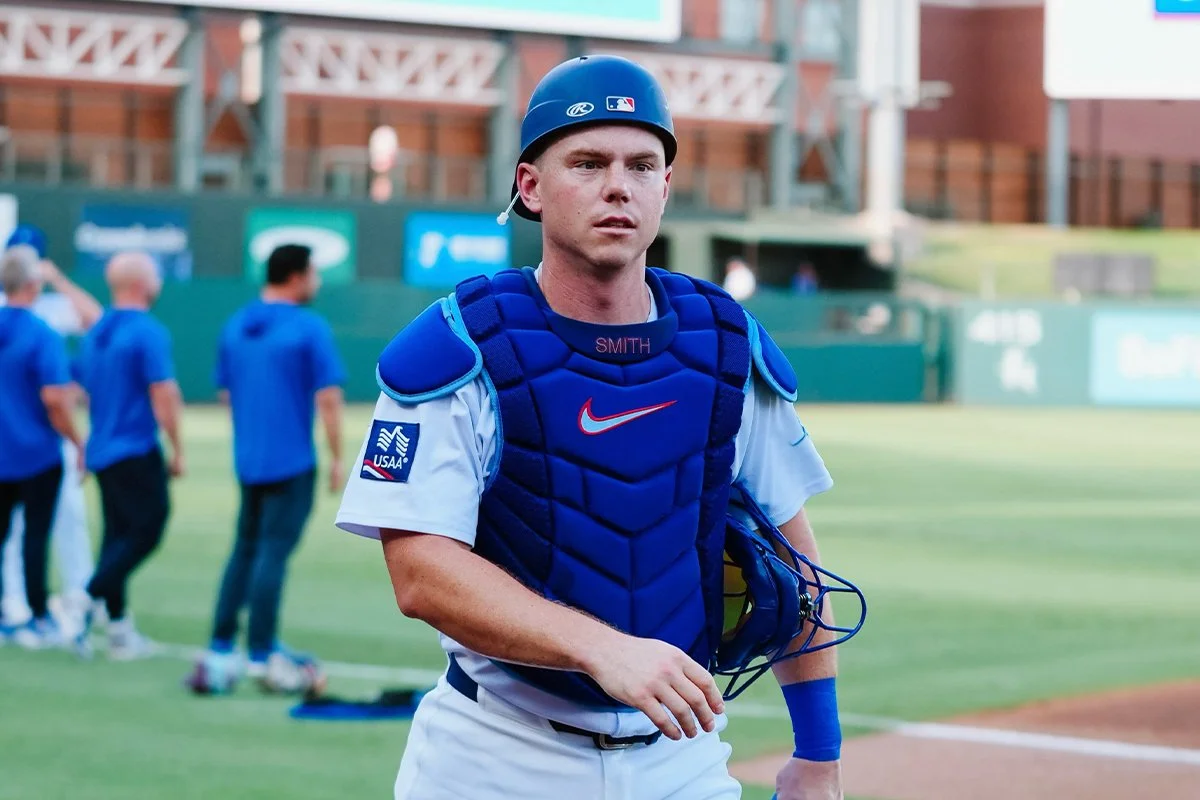
Will Smith could hardly have asked for a more encouraging first test on his road back to the Los Angeles Dodgers.
Playing his first competitive game in nearly three months Tuesday night, Smith homered, completed his planned workload behind the plate and threw out a runner attempting to steal during his first Minor League rehabilitation appearance with Triple-A Oklahoma City.
Smith went 1-for-3 with a two-run home run and two RBIs in the Comets’ 4-3 loss to the El Paso Chihuahuas at Chickasaw Bricktown Ballpark. More importantly for the Dodgers, he caught five innings without a reported setback after a lengthy absence caused by an inflamed disc in his neck.
For a player who had not appeared in a game since June 5, the night offered several positive signs.
His bat produced hard contact.
His arm looked ready.
And his neck handled the physical demands of catching for the exact amount of time the Dodgers had planned.
Smith Saved His Biggest Swing for His Final At-Bat
The box score says Smith finished with one hit in three at-bats, but that does not fully describe the quality of his offensive night.
His first two trips to the plate both produced contact, including a 103.7 mph lineout and a flyout measured at 90.9 mph. In his third and final at-bat, Smith finally got a result to match the quality of his swings.
With Oklahoma City trailing 4-0 in the fifth inning, Smith drove a two-run homer over the left-field wall, bringing the Comets back into the game.
It was his first hit of the rehab assignment and his first home run in game action since being sidelined.
The significance goes beyond the result.
After a player spends nearly three months away, timing at the plate can take time to return. Smith did not need multiple games before making authoritative contact against live pitching.
Even before the home run, the exit velocity on his lineout suggested his swing was producing the kind of contact the Dodgers wanted to see.
Then he left the ballpark.
For a catcher trying to get his offensive rhythm back before September, that is a strong first step.
His Work Behind the Plate May Have Been Even More Important
The home run will understandably receive most of the attention, but Smith’s defensive workload may have been the more meaningful part of Tuesday’s assignment.
Manager Dave Roberts said before the game that the Dodgers planned to have Smith catch five innings.
He completed all five.
That matters because catching presents a much different physical test than simply serving as a designated hitter.
Smith had to squat repeatedly, receive pitches, block balls, move laterally and make throws from behind the plate — all actions that can place stress on the neck and upper body.
The Dodgers needed to see how his body responded to those demands in an actual game environment.
Smith even provided a defensive highlight in the third inning.
San Diego Padres outfielder Samad Taylor, who was also appearing on a rehab assignment, attempted to steal second base. Smith threw him out. The Comets’ official recap confirmed the caught stealing, giving Los Angeles another encouraging sign that Smith’s throwing mechanics and arm strength were functioning normally.
For someone returning from a neck problem, executing a quick transfer and strong throw from the crouch is not an insignificant test.
Smith passed it.
This Was His First Game Since June 5
Tuesday marked Smith’s first competitive appearance in nearly three months.
He last played for the Dodgers on June 5 before neck trouble eventually forced him out of the lineup. Los Angeles placed him on the injured list June 11, and the absence ultimately became much longer than initially anticipated.
The Dodgers later transferred him to the 60-day injured list on July 21.
The official diagnosis has been an inflamed disc in his neck.
Smith’s recovery progressed slowly enough that the organization had to shut him down for an extended period before gradually rebuilding his baseball workload.
Only recently did the picture begin to change substantially.
Smith advanced from regular baseball activity to live batting practice at Dodger Stadium. That progression eventually convinced the Dodgers he was ready for the more demanding test of actual Minor League competition.
Tuesday was the first opportunity to see whether those controlled workouts would translate into game action.
So far, the answer is encouraging.
Sept. 1 Is a Target, Not a Guarantee
The Dodgers already have a potential return date in mind.
Roberts said before Smith’s first rehab appearance that Los Angeles hopes to have its starting catcher active around Sept. 1, when Major League rosters expand.
But that date should not be treated as a firm commitment.
Roberts made clear that Smith’s health will determine the timetable.
That is particularly important after such a lengthy absence.
The biggest evaluation may not occur while Smith is on the field.
It may come the following morning.
How does his neck respond after five innings behind the plate?
Is there increased soreness?
Can he return to the lineup the next day?
Can the Dodgers gradually increase his catching workload without symptoms resurfacing?
Those questions will determine whether the Sept. 1 target remains realistic.
The initial plan called for the Dodgers to decide whether Smith would catch another five innings or serve as the designated hitter in his next appearance.
That approach gives Los Angeles the flexibility to get Smith additional at-bats without unnecessarily accelerating the physical demands behind the plate.
Dodgers Have Missed Smith on Both Sides of the Ball
Smith’s eventual return could provide a major boost at a position where the Dodgers have dealt with significant injury problems.
His value is not limited to what he provides offensively.
Smith handles a pitching staff, controls the running game and gives the Dodgers an experienced catcher who has worked with many of the club’s most important arms.
The timing could be particularly useful as Los Angeles gets more of its rotation healthy.
Tyler Glasnow has returned.
Blake Snell is back.
Shohei Ohtani is progressing toward a potential pitching return.
Having Smith behind the plate again would give the Dodgers another important piece as they try to settle their roster before October.
The club’s catching depth has also been tested by Dalton Rushing’s right elbow injury. MLB reported that Rushing suffered a partial UCL tear earlier this month, making Smith’s recovery even more important to the Dodgers’ depth behind the plate.
That does not mean Los Angeles will rush Smith simply because it needs him.
After losing nearly three months of his season, getting him completely healthy is far more important than gaining a few additional August at-bats.
First Rehab Game Checks Nearly Every Box
One Minor League game cannot prove that Smith is ready to immediately resume a full Major League workload.
It can, however, provide evidence that the rehabilitation process is moving in the right direction.
Tuesday supplied plenty.
Smith caught the planned five innings.
He successfully threw out a runner.
He produced hard contact in multiple plate appearances.
And he finished his night by driving a two-run homer to left field.
There were no publicly reported problems with his neck during the game.
That is about as productive a first rehab appearance as the Dodgers could have reasonably hoped for.
The next step will be seeing how Smith recovers and how much workload Los Angeles gives him in the remaining games of the assignment.
If his body continues responding well, the Dodgers may not have to wait much longer to get their starting catcher back.
For now, Smith has cleared an important hurdle.
After nearly three months away from game action, Will Smith returned behind the plate Tuesday — and immediately reminded the Dodgers what they have been missing.