
Tyler Glasnow Officially Returns to Dodgers Rotation Tonight in Atlanta
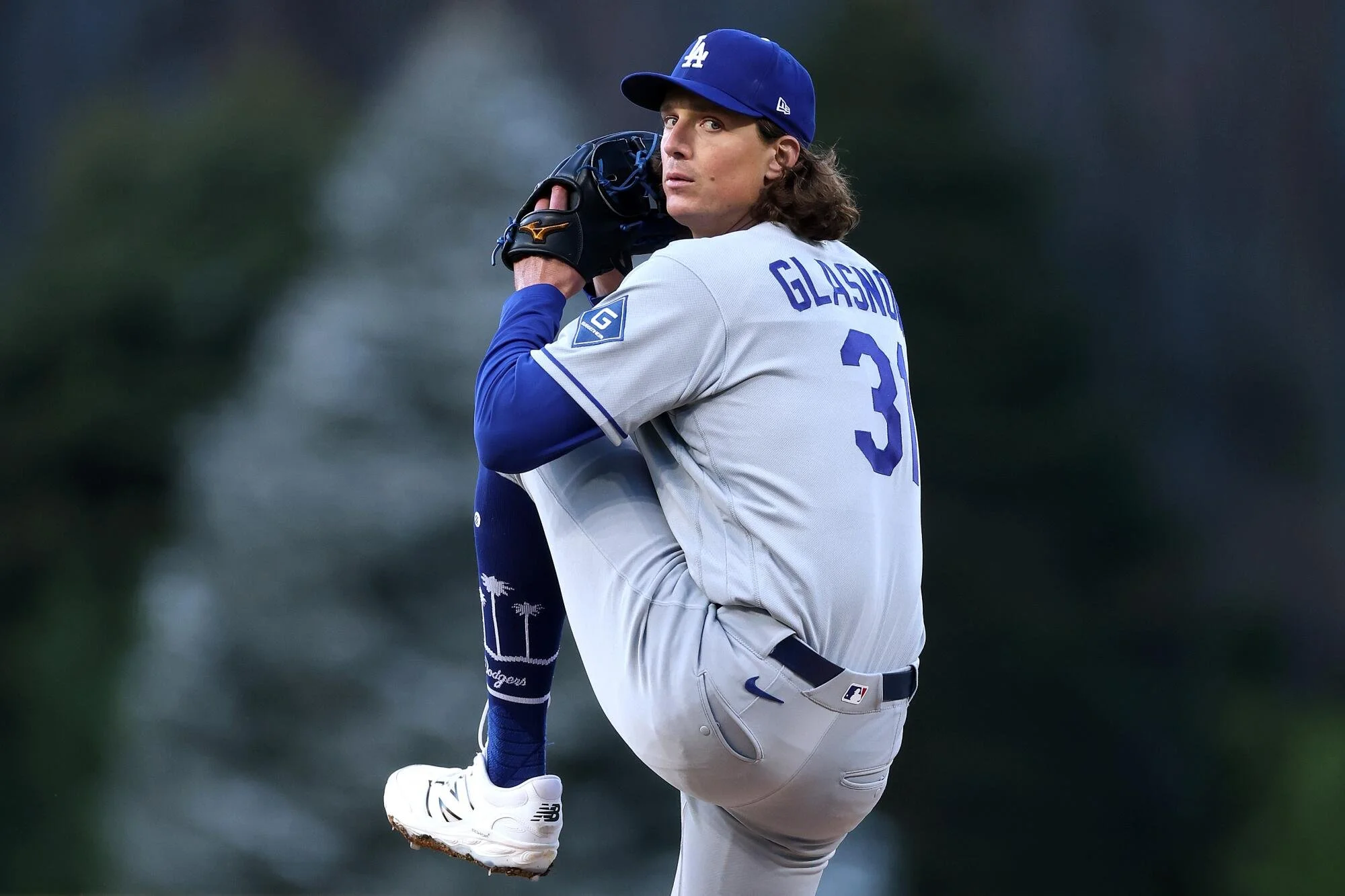
The wait is officially over for Tyler Glasnow and the Los Angeles Dodgers.
The Dodgers activated Glasnow from the 60-day injured list Tuesday, clearing the way for the right-hander to start the series opener against the Atlanta Braves at Truist Park. Los Angeles optioned right-handed reliever Paul Gervase to Triple-A Oklahoma City in the corresponding active-roster move.
That distinction matters. Glasnow had been penciled in for Tuesday and was widely expected to return, but this is no longer a projected timetable or another step in an injury progression. He is active, he is back in the Dodgers' rotation, and he is scheduled to take the ball against Atlanta.
For a Dodgers club trying to get its pitching staff healthy before October, the timing could hardly be more significant.
Glasnow enters his return start with a 3-0 record, 2.72 ERA, 49 strikeouts and a 0.83 WHIP across 39 2/3 innings in seven starts this season. Atlanta will counter with right-hander Bryce Elder, who enters Tuesday at 8-7 with a 3.92 ERA. First pitch at Truist Park is scheduled for 7:15 p.m. ET, or 4:15 p.m. PT.
Glasnow's Long Road Back Is Finally Complete
Glasnow has not appeared in a Major League game since May 6 against the Houston Astros.
His afternoon in Houston lasted only one inning after lower back spasms forced him from the game. The Dodgers placed him on the injured list two days later, and what initially appeared capable of becoming a relatively short absence eventually developed into a much longer recovery.
Los Angeles transferred Glasnow to the 60-day IL on June 6 as the back continued to prevent him from progressing through his throwing program. MLB's transaction log confirms the sequence: Glasnow went to the 15-day IL on May 8, moved to the 60-day IL on June 6 and was officially activated on August 25.
There was at least one memorable milestone before his May 6 start ended prematurely. Glasnow struck out Astros slugger Yordan Alvarez for the 1,000th strikeout of his Major League career before departing.
It would be nearly four months before strikeout No. 1,001 could become a possibility.
The back issue proved stubborn during the early stages of Glasnow's recovery. The Dodgers initially hoped to ramp him up more quickly, but recurring discomfort slowed the process. Once he began making steady progress in July, however, his recovery started moving in a much more encouraging direction.
That eventually led to a Minor League rehabilitation assignment and, ultimately, Tuesday's activation.
Glasnow Looked More Than Ready in His Final Rehab Start
If the Dodgers were looking for evidence that Glasnow's stuff had returned before sending him back into a pennant race, they received plenty of it.
His final rehab outing for Triple-A Oklahoma City was dominant.
Glasnow worked 5 1/3 innings against Sugar Land on August 19, allowing only one hit and one walk while striking out nine. He threw 77 pitches, including 54 strikes, and was charged with one run after a runner he left on base scored following his departure.
That performance was significant for more than the box score.
The Dodgers typically want a starting pitcher returning from a lengthy absence to reach approximately five innings and 75 pitches before activation. Glasnow essentially hit both benchmarks in his final tune-up. His outing also followed 3 2/3 hitless innings with eight strikeouts in his previous Triple-A appearance.
Across four Minor League rehab appearances, Glasnow finished with a 1.32 ERA and 20 strikeouts in 13 2/3 innings, according to the Dodgers' official activation announcement.
Those numbers do not guarantee immediate Major League dominance. Rehab competition is different from facing a division-leading Braves club with postseason positioning at stake.
But the combination of workload, strike-throwing and swing-and-miss stuff gave the Dodgers reasons to believe Glasnow had completed the physical buildup necessary to return.
Perhaps most encouragingly, manager Dave Roberts said before the activation that Glasnow was not expected to operate under a predetermined pitch limit when he returned.
That does not mean the Dodgers will allow him to throw without regard for workload. Roberts and the coaching staff will undoubtedly monitor the 33-year-old closely after such a lengthy layoff. It does mean, however, that Tuesday is being treated as a legitimate start rather than simply another controlled rehabilitation outing taking place in a Major League ballpark.
Glasnow Was Pitching at an Elite Level Before the Injury
The length of Glasnow's absence can make it easy to forget just how effective he was before his back became an issue.
Through seven starts, opponents had struggled to generate much against him. His 2.72 ERA came with 49 strikeouts in 39 2/3 innings, giving the Dodgers another high-end swing-and-miss starter when healthy.
His underlying pitch data also helps explain that success.
According to Baseball Savant, Glasnow's knuckle curve generated a 44.9 percent whiff rate before his injury, while his slider produced a 41.3 percent whiff rate. His sinker, meanwhile, held hitters to a .097 batting average.
That combination is what can make a healthy Glasnow especially difficult to solve.
He does not have to survive with one dominant pitch. He can attack hitters with premium velocity, change the shape of at-bats with the sinker and then use the breaking ball to finish them. When his command is working and his body is cooperating, his pitch mix gives him the type of strikeout ceiling that can translate particularly well to postseason baseball.
Tuesday's start will offer the Dodgers their first look in months at whether that entire arsenal translates immediately from the rehab assignment back to Major League competition.
The results of one night should not determine how his return is judged, though.
For Los Angeles, the larger objective is getting Glasnow healthy, comfortable and fully sharpened before the postseason begins.
Dodgers' Rotation Is Suddenly Getting Much Healthier
Glasnow's activation also looks different when viewed within the bigger picture of the Dodgers' pitching staff.
For much of the season, Los Angeles has been forced to navigate injuries and changing rotation combinations. Now, with a little more than a month remaining in the regular season, the group is beginning to resemble the rotation the organization envisioned having available for an October run.
Glasnow returns to a group that includes Yoshinobu Yamamoto, Tarik Skubal, Blake Snell, Roki Sasaki and Eric Lauer. MLB reported that the Dodgers have been operating with that group as a six-man rotation, while Shohei Ohtani continues working toward a potential return to the mound.
That is an extraordinary amount of potential starting-pitching depth.
It also gives Roberts and the Dodgers choices they simply did not have when injuries were piling up earlier in the year.
The significance of those choices becomes even greater in October, when teams can shorten rotations, manipulate days of rest and deploy starters in unconventional roles if necessary.
Glasnow does not need to solve those postseason questions Tuesday night.
He does need to begin giving the Dodgers information.
How does his velocity look against Major League hitters? Does his command hold up as the pitch count climbs? Is the breaking ball as sharp as it appeared during the rehab assignment? How does his back respond after pitching at full intensity and then going through the normal recovery cycle between starts?
Those are the questions Los Angeles can begin answering now rather than in late September.
Around Six Starts Could Be Enough to Prepare Glasnow for October
There is still meaningful time remaining on the calendar.
With the Dodgers using a six-man rotation and the regular season entering its final stretch, Glasnow could receive roughly six turns through the rotation before October if he stays healthy and the club maintains its current alignment. That should be viewed as an estimate rather than a guaranteed number of starts, but it gives Los Angeles a legitimate runway to build him toward postseason form.
That may be more important than attempting to extract maximum length from him immediately.
The Dodgers want October's version of Glasnow to be better than August's version.
Roberts has indicated that the goal is to let Glasnow work through any rust now so he can reach peak form by the postseason.
There is a balancing act involved.
Glasnow has dealt with multiple injuries during his Dodgers tenure, including lower-back and elbow issues in 2024, shoulder inflammation that cost him significant time in 2025 and the back spasms that caused this year's absence. MLB's transaction history documents those injured-list stints.
His health history makes durability an unavoidable part of the conversation.
It also explains why the next several weeks are so important.
The Dodgers are not simply trying to determine whether Glasnow is capable of overpowering hitters. His career has already provided ample evidence of that. They need to determine whether he can sustain his stuff, recover normally between starts and remain available when games carry their greatest stakes.
Atlanta Provides an Immediate Test
Glasnow will not receive a soft landing in his first game back.
The Dodgers enter Tuesday at 80-51, while the Braves are 76-55. Both clubs lead their respective National League divisions, and MLB has identified the three-game series as potentially important to postseason seeding.
That larger playoff picture deserves its own discussion, but for Glasnow specifically, facing Atlanta provides a useful measuring stick.
The Braves have talented hitters capable of punishing mistakes, and unlike a rehabilitation appearance in the Minor Leagues, every pitch Tuesday comes against a team with its own October ambitions.
There may be command rust. There may be an inning in which his mechanics drift. There may be pitches that worked against Triple-A hitters but receive a different reaction from Atlanta's lineup.
None of those possibilities would make the return unsuccessful.
The most important development has already occurred: Glasnow completed his rehab progression, reached a normal starting workload and was medically and competitively ready enough for the Dodgers to activate him.
Now the process changes from rehabilitation to preparation.
Glasnow's Return Could Change the Dodgers' October Ceiling
There is an important difference between having pitching depth on paper and actually having those pitchers healthy enough to take the mound.
For the first time in months, Glasnow is again part of the latter category.
The Dodgers can officially write his name into the rotation rather than an injury report.
If the pitcher who posted a 2.72 ERA before getting hurt can re-emerge over the next several weeks, Los Angeles gains another starter capable of missing bats at an elite level and dominating a postseason game. If his final rehab appearances are any indication, the quality of his stuff appears to have survived the long layoff.
But that remains something Glasnow must prove against Major League hitters.
Tuesday night is the beginning of that test, not the conclusion.
The Dodgers do not need Glasnow to pitch like an October ace immediately in Atlanta. They need him healthy when he finishes, responsive during the days that follow and a little sharper each time his turn comes around.
If that happens, his activation could eventually be remembered as one of the most consequential roster additions Los Angeles made all season — without making a trade at all.
After more than three months away from a Major League mound, Tyler Glasnow is no longer rehabbing, progressing or targeting a return date.
He is active. He is starting. And Tuesday night, Tyler Glasnow is officially back in the Dodgers rotation.