
Dodgers Have October Plan for Shohei Ohtani’s Pitching Buildup
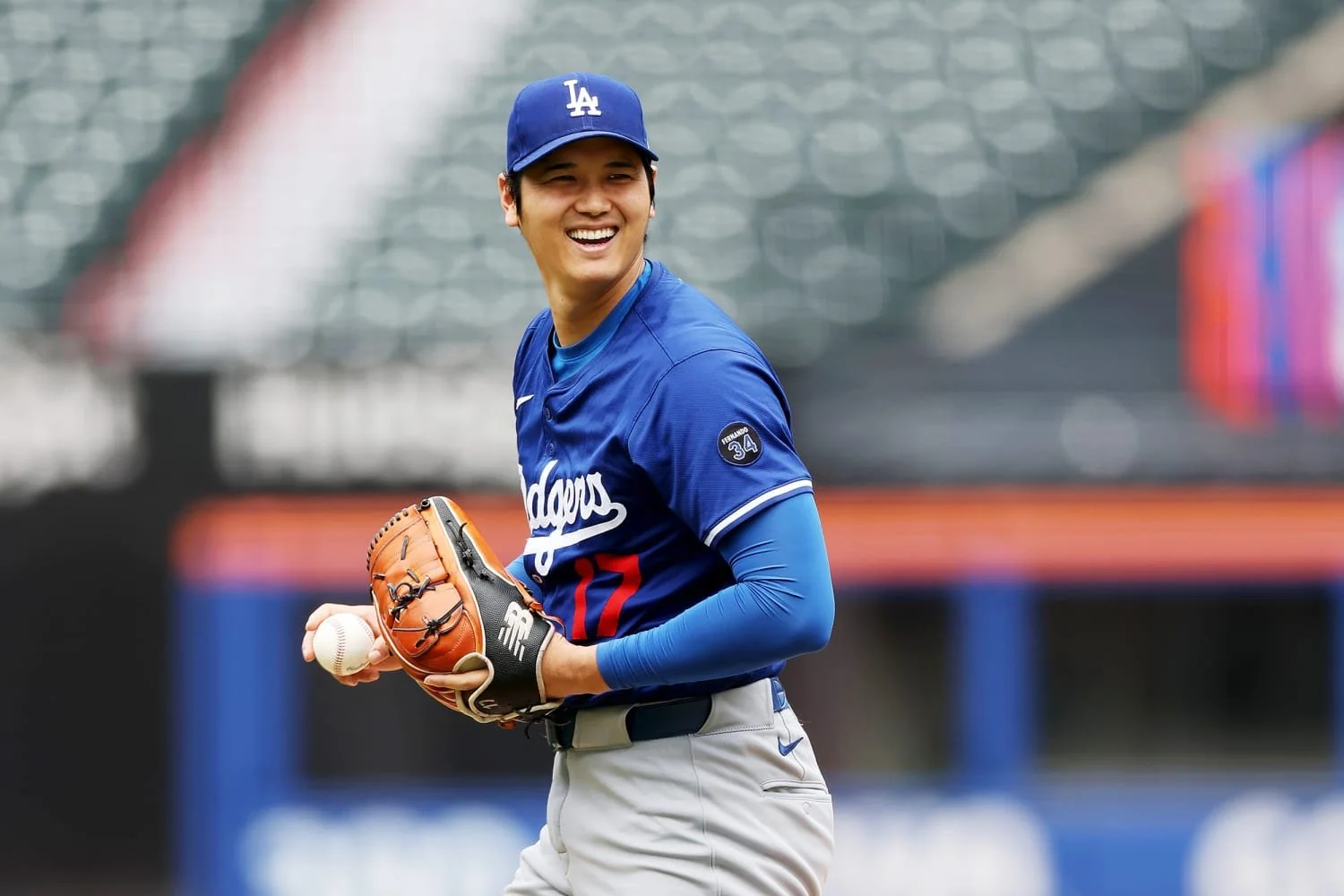
Shohei Ohtani's return to the mound is getting closer, but the Los Angeles Dodgers are no longer thinking only about when he will throw his next Major League pitch.
They are thinking about October.
The Dodgers are developing a plan that could gradually build Ohtani from a brief opening appearance into a pitcher capable of giving Los Angeles approximately five innings in a postseason start. A return could potentially come as soon as Sunday against the Detroit Tigers, with the club considering an initial outing of just one inning, according to recent reporting. That possibility remains under consideration rather than finalized.
The distinction is important.
Ohtani's story is no longer simply that he is nearing a return from the left knee soreness that has kept him off the mound since July 3. The more significant development is that the Dodgers believe there may still be enough regular-season runway to transform him from a carefully managed opener into something much closer to a traditional starting pitcher by the time the postseason begins.
Manager Dave Roberts has said Ohtani could potentially build toward five-inning outings by October. If Ohtani returns this weekend and continues pitching roughly once per week, Los Angeles could have four or five Major League appearances to increase his workload before the regular season ends Sept. 27.
That gives the Dodgers options.
And when the pitcher in question is Shohei Ohtani, options can become one of the most valuable resources a postseason team possesses.
Ohtani Could Return as Soon as the Detroit Series
The immediate question is whether Ohtani's next pitching appearance comes sooner than initially expected.
MLB reported Saturday that Ohtani was likely to return during the Dodgers' Sept. 1-9 homestand. At that point, the plan called for another bullpen session during the series in Atlanta, with the results of that session determining whether he needed to face live hitters again before returning to game action.
The timetable has since become more aggressive.
Newer reporting indicates that the Dodgers are considering having Ohtani start Sunday against the Tigers in Detroit and pitch approximately one inning. The club had not finalized those plans as of the latest reports, meaning Sunday should be viewed as a possibility rather than an announced start.
Roberts has also made clear that Ohtani's response to his next bullpen session — and Ohtani's own assessment of how he feels — will determine the next step.
If he believes he is ready to face Major League hitters, the Dodgers could move forward. If Ohtani wants another live batting-practice session first, his return could be pushed into the upcoming homestand.
That flexibility is consistent with how Los Angeles has handled Ohtani throughout his pitching career with the organization.
The Dodgers have little reason to force a specific date.
What matters considerably more is getting the progression right.
Ohtani Passed an Important Test Against Live Hitters
Ohtani took one of the biggest steps in that progression Saturday when he faced hitters for the first time during his current throwing program.
He threw 30 pitches over six simulated plate appearances against Dodgers catcher Will Smith, who is working his way back from a neck injury.
It was Ohtani's first time facing live hitters since his most recent Major League start.
Roberts made it clear afterward that Ohtani himself is eager to accelerate the process.
"If it were up to Shohei," Roberts told reporters, "he'd be in a game in a few days."
The Dodgers, understandably, have to consider more than Ohtani's eagerness.
They are evaluating his delivery, knee, workload, recovery between throwing sessions and the effect that pitching could have on the player who remains at the center of their offense.
Ohtani has continued serving as the Dodgers' designated hitter throughout most of his pitching absence, making his recovery process fundamentally different from that of a conventional injured starting pitcher.
Sending him on a Minor League rehabilitation assignment would remove his bat from the Major League lineup.
Instead, the Dodgers can build him up in Major League games.
They have done it before.
And they may be preparing to do it again.
One Inning Could Be Only the Beginning
If Ohtani returns against Detroit, fans should not interpret a one-inning outing as evidence that the Dodgers see him merely as an opener for the postseason.
It would be the first step of a larger buildup.
MLB reported that Ohtani would likely work approximately one inning in his first start, unless he completes that inning efficiently enough for the Dodgers to send him back out for another. The club would then gradually increase his workload in subsequent appearances.
That approach should look familiar.
When Ohtani returned to pitching in 2025 following his lengthy rehabilitation from elbow surgery, Los Angeles essentially used Major League games as his buildup environment.
The circumstances are different this time — the current absence stems from left knee soreness rather than his surgically repaired elbow — but the workload strategy can follow a similar pattern.
One inning becomes two.
Two can become three.
If the recovery between starts remains clean, the workload can continue expanding.
The goal is not necessarily to have Ohtani throwing 100 pitches before September ends.
The goal is to have enough evidence that he can provide meaningful innings in October without compromising either his health or his offensive production.
That is where the five-inning target becomes particularly intriguing.
Dodgers Believe Five-Inning Ohtani Could Still Be Possible by October
Earlier in Ohtani's recovery, the Dodgers appeared prepared for the possibility that he would function primarily as a multi-inning opener if he returned to the mound late in the year.
That outlook has changed.
Ohtani's progress has apparently gone well enough that Los Angeles now believes he could still build toward a more traditional starter's workload before the postseason.
Roberts has indicated that reaching five innings by October remains possible.
That would dramatically change the conversation around the Dodgers' postseason pitching staff.
A one- or two-inning Ohtani is useful.
A five-inning Ohtani with the form he showed earlier this season could be a legitimate October weapon.
Before the knee issue forced him out of the rotation, Ohtani was 8-2 with a 1.79 ERA and 95 strikeouts across 85 2/3 innings in 14 starts.
Those are not the numbers of a novelty starter.
They are the numbers of one of the most effective pitchers in baseball.
The Dodgers therefore have good reason to determine how much of that version of Ohtani they can realistically recover before their most important games begin.
The Dodgers Have Enough Time — But Not Much to Waste
Timing is what makes the possible Detroit start especially significant.
If Ohtani waits until later in the Sept. 1-9 homestand, the Dodgers would have fewer regular-season starts available to increase his workload.
If he is ready to pitch Sunday, the club gains another turn through the progression.
Assuming roughly one start per week, Ohtani could receive as many as four or five game appearances before the end of the regular season if his buildup begins in Detroit. That is an estimate, not a commitment from the Dodgers, and health will dictate the schedule at every stage.
Still, consider what a gradual progression might theoretically allow.
Ohtani could begin with one inning.
A subsequent start could stretch him to two or three.
The Dodgers could then continue expanding his workload depending on pitch efficiency and how his body responds.
There is no guarantee the progression will follow a perfectly linear schedule. Pitch count matters just as much as innings, and a difficult 30-pitch inning creates a very different workload than an efficient 12-pitch frame.
But starting earlier creates flexibility.
And flexibility is precisely what Roberts appears to value.
Eric Lauer Gives the Dodgers a Perfect Partner for the Plan
The Dodgers also have a pitcher capable of making this strategy substantially easier to manage.
Eric Lauer is expected to work in a bulk-relief or "piggyback" capacity as the rotation becomes healthier, and he is positioned to follow Ohtani during the early stages of his buildup.
Roberts specifically highlighted Lauer's ability to provide length as one of the reasons the Dodgers can ease Ohtani back into Major League games.
That pairing makes considerable sense.
Suppose Ohtani pitches only one inning in his first start.
Instead of asking four or five conventional relievers to cover the rest of the game, Roberts can turn to Lauer for multiple innings.
The same formula works if Ohtani eventually reaches two or three innings.
Rather than treating those starts as bullpen games, the Dodgers can essentially combine Ohtani and Lauer into one full starting-pitcher workload.
It protects Ohtani.
It protects the bullpen.
And it allows Los Angeles to increase Ohtani's workload without sacrificing an entire game's pitching plan in the process.
Roberts described having that kind of flexibility as a major benefit for the club.
That could become even more important in September as the Dodgers simultaneously manage workloads, injuries and postseason positioning.
Ohtani's Two-Way Status Creates a Roster Advantage Few Teams Can Match
Ohtani's value as a pitcher extends beyond the quality of the innings he provides.
His official status as a two-way player gives the Dodgers unusual roster flexibility.
MLB limits teams to 13 pitchers on a standard 26-man roster, but Ohtani does not count against that pitcher limit because he qualifies as a two-way player. That allows the Dodgers to carry a full complement of pitchers while receiving additional innings from someone who is also occupying a lineup spot as their designated hitter.
Those are the "bonus" innings the Dodgers have discussed missing during his absence.
When Ohtani pitches, Los Angeles effectively receives another pitching option without sacrificing a position-player roster spot to create it.
That can matter over 162 games.
It can become even more valuable in October, when every bullpen matchup and every available arm receives additional scrutiny.
If Ohtani can provide four or five innings in a postseason start, the Dodgers would be getting nearly a full starter's workload from a player who simultaneously remains one of the most dangerous hitters in baseball.
There is no comparable roster construction advantage available to another contender.
A Healthy Ohtani Would Make an Already Deep Rotation Even More Complicated
The irony is that Los Angeles does not desperately need Ohtani to save an otherwise depleted rotation.
The pitching staff is getting healthier at precisely the right time.
Tyler Glasnow has returned from the 60-day injured list. Blake Snell is back and pitching well. Yoshinobu Yamamoto remains a major postseason option, and the Dodgers have additional starting depth available behind their highest-profile arms.
That gives Roberts a problem almost every manager would gladly accept:
Too many credible pitchers for too few postseason starts.
Ohtani's presence does not simplify that equation.
It makes it even more interesting.
If he reaches five innings and looks anything like the pitcher who carried a 1.79 ERA through 14 starts, it becomes extremely difficult to imagine leaving him out of important October games.
At the same time, Los Angeles does not have to force him into a traditional starter's role if his buildup stalls at three or four innings.
A shorter Ohtani outing could still be paired with a bulk pitcher.
He could help shorten the amount of work required from the bullpen.
The Dodgers could alter their approach depending on opponent, schedule and the availability of the rest of the rotation.
That is the flexibility Roberts is talking about.
The Dodgers Also Have to Protect Ohtani the Hitter
There is another part of this calculation that cannot be ignored.
Every pitching decision involving Ohtani also involves one of the Dodgers' most important offensive players.
The organization cannot manage his pitching workload in isolation.
The objective is not merely to have Ohtani available on the mound in October. It is to have the best possible version of Ohtani available on both sides of the ball.
MLB's reporting on his current progression has repeatedly emphasized that point.
That means the Dodgers will have to monitor more than his velocity and command after he returns.
How does his lower body respond?
How does he recover the following day?
Does the additional physical workload affect his swing?
Can Los Angeles strategically align his pitching starts with off-days to provide additional recovery time?
Those questions are part of what makes Ohtani's workload management unlike anything else in the sport.
A normal starting pitcher can spend the four or five days after a start focused almost exclusively on preparing to pitch again.
Ohtani is expected to hit in the middle of a championship-caliber lineup while doing it.
The Dodgers are not simply building up a pitcher.
They are managing a two-way superstar through the most demanding portion of the season.
October Is the Real Deadline
Whether Ohtani returns Sunday in Detroit or during the homestand that follows, the most important date is not his first game back.
It is the beginning of the postseason.
The Dodgers do not need Ohtani to throw five innings immediately.
They need to know whether he can throw five when October demands it.
That makes every appearance between now and the end of September part of a larger experiment.
The first outing could last one inning.
The next might last two.
The Dodgers will evaluate Ohtani's stuff, command, efficiency and recovery before deciding how aggressively to continue.
If the buildup goes perfectly, Los Angeles could enter October with another legitimate starting pitcher.
If it progresses more slowly, Roberts could still use Ohtani as an opener and pair him with a bulk arm.
Either outcome provides value.
And that is what makes the Dodgers' developing plan more significant than another routine injury update.
Ohtani's Return Is About More Than Getting Back on the Mound
The easiest headline would be that Shohei Ohtani is getting closer to pitching again.
That is true.
But it misses the bigger story.
The Dodgers are approaching his return with a postseason blueprint already in mind.
They have a possible opening for him as soon as this weekend in Detroit. They have a bulk pitcher in Eric Lauer capable of covering innings behind him. They have enough time remaining to gradually increase his workload. And they believe a five-inning version of Ohtani could still be attainable by October if his progression continues without setbacks.
Nothing about that outcome is guaranteed.
Sunday remains a possibility rather than an official start. Five innings is a goal, not a promise. And the Dodgers have made clear throughout Ohtani's recovery that his health will dictate how quickly they move.
But Los Angeles can now see a path.
A month ago, the question was when Ohtani might pitch again.
Now the Dodgers can begin asking a much more intriguing question:
How much Shohei Ohtani can they have on the mound when October arrives?